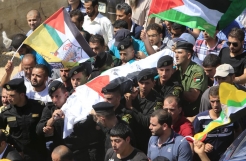
The Palestinian flag is to be hoisted for the first time today on United Nations buildings. Palestinian leader Mahmoud Abbas said that it would be a "most emotional and proud day" for him and for his people. Others are less enthusiastic: when the motion promoting it was passed earlier this month, Israel's permanent representative to the United Nations, Ron Prosor, said it was was a "blatant attempt to hijack the UN".
It's just a flag, what's the big deal?
It is just a flag, but a flag is quite important. It symbolises nationhood, but in some contexts it can symbolise statehood too, which is not quite the same thing.
You've lost me. What?
I'm going to see Wales play Fiji tomorrow and there will be lots of Welsh dragons around. Wales is a nation, but it's not a state. Palestine is a nation, but it isn't a state either. The question of whether it should be has dogged and bedevilled international relations for decades, but it isn't settled yet. Israel thinks that the UN is jumping the gun by letting it fly its flag before it's a proper country. It believes the UN is putting pressure on it because most countries are opposed to its policy on Palestine.
Is Israel right?
It's certainly true that the Palestinians have won a propaganda victory. They drafted a motion saying that the flags of non-member observer states like Palestine "shall be raised at (UN) Headquarters (in New York) and United Nations Offices following the flags of the member states". There were 119 votes in favour out of 193 UN members.The United States and Israel were among eight countries that voted against.
So if Palestine isn't a state, what is it?
Good question. It is made up of territory occupied and controlled by Israel but not part of Israel. It is administered by its own Palestinian Authority, headed by Mahmoud Abbas – though Gaza is run by Hamas – but Israel continues to build settlements on its territory, which is continually shrinking. Countries including Britain have argued consistently for a "two-state solution", which would see Palestine recognised as a proper state, secure in internationally-recognised borders. It has not been possible to reach an agreement on this.
It seems reasonable, though.
Reason is not a word that springs to mind when this part of the world is under consideration. Israel says it won't accept a two-state solution because it doesn't trust the Palestinians' peaceful intentions. It also wants Palestinian land for its expanding population, and many Israelis believe the whole territory should be Israeli anyway. The Palestinians aren't happy because so much of their territory has been absorbed by Israel, which won't give it back. They also want a 'right of return' for refugees who fled Israeli forces in 1948 and 1967. Many observers say that a two-state solution is impossible now anyway, because there isn't enough of Palestine left to be viable.
And the flag?
Palestine is trying to achieve recognition as a state by the UN because it would help its cause against Israel. It has had some success – in 2012 it became a "non-member observer state", the same position that the Vatican holds. However, support for Israel from America and Britain, among others, means that there will probably be no further progress. Israel is very sensitive to criticism from the UN, which it believes doesn't give enough weight to its security concerns. The sight of the Palestinian flag flying there will be irritating beyond words.
Will it really make a difference, though?
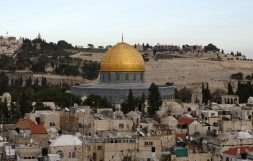
It's another sign of the world's disapproval of Israel's policy, but other than that, no. The Israel/Palestine conflict shows no sign of resolution; the current disturbances at the al-Aqsa mosque in Jerusalem are a sign of how little trust there is around at the moment.
Follow @RevMarkWoods on Twitter.