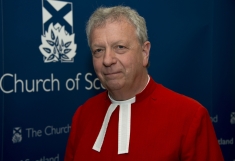
The Church of Scotland's decision to allow congregations to call ministers in same-sex marriages has received much media attention. The move was hailed by liberals and denounced by conservatives, and the Principal Clerk to the General Assembly, the Very Rev John Chalmers, admitted it was a divisive issue. However, he said: "I hope we have now put this issue to one side and we can now get on with what I believe are important issues – developing our vision for the Church, increasing membership and developing our work around mission."
Some hope. The question of same-sex marriage is not so easily solved, as many denominations have found.
The Council of the Baptist Union of Great Britain (BUGB) was roundly criticised from within the denomination when it affirmed the traditional view of marriage but said it couldn't stop ministers conducting same-sex weddings if they were determined to do so (though they still can't be in same-sex marriages themselves). The United Methodists have just finished their conference in the US, at which the question threatened to split the denomination; even God was confused by their debates, one delegate said. The long-drawn-out Anglican angst over the issue is too well known to need repeating.
For the Church of Scotland to allow same-sex married clergy was almost inevitable. Some technicalities: it followed a vote last year saying that ministers in civil partnerships could be ordained and a subsequent vote proposing that presbyteries be asked to approve plans extending the right to same-sex married people. Presbyteries voted 26 to 19 to refer the issue to the General Assembly and the vote proceeded accordingly. The measure was passed by 339 votes to 215.
Officially, the Church's position on marriage remains traditionalist. But congregations can opt out if they want and call ministers in same-sex marriages. As Chalmers said: "We had a debate which made very clear that we were not interfering with our theological definition of marriage and were not going to the place where ministers or deacons could themselves conduct same sex marriages. It is an entirely different discussion."
The trouble is that it isn't a different discussion. At present, the Church's official teaching says X, while its ministers are allowed to embody and propagate Y. That congregations are allowed to opt out is an elegant enough fudge, but it is still a fudge. As long as ministers are allowed to be married to a same-sex partner themselves without being able to perform such marriages for other people, the Church is wide open to the charge of egregious hypocrisy. This is not a position that is sustainable, either theologically or in pure common sense. Apart from anything else, it represents a queasy compromise over the nature of the Church of Scotland itself. Is it a single Church, centrally governed and doctrinally cohesive, or is it a fragmenting federation like BUGB?
Its Theological Forum is due to complete a report on the same-sex issue to be presented to next year's assembly. Church of Scotland leaders are well aware the present situation is unsustainable. They are hoping and praying for clarity, and for a way forward that allows conservatives to continue to serve with integrity. Judging by the experience of other denominations, it is difficult to be optimistic.
Follow Mark Woods on Twitter: @RevMarkWoods