The Israeli government is set to hold a historic vote on Sunday, regarding whether to allow men and women to pray together at the Western Wall. Almost three years after the idea was first raised, a plan has developed to create a space where both men and women can pray together at the holiest of Jewish sites.
This might not sound like huge news in itself; you may be aware that both men and women are allowed to pray at the Wall, just not together. However, there are significant implications for the Western Wall and those who oversee it if the proposal goes through.
Currently, prayer services at the wall are supervised by the ultra-Orthodox Western Wall Heritage Foundation, which does not tolerate women singing in public. This does not sit well with Conservative and Reformed Jews who wish to pray there as they see fit.
So what actually is the Western Wall?
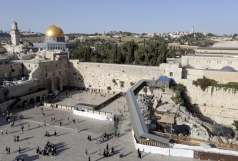
The Western Wall, or the Kotel as it is known in Hebrew, is the holiest site for the Jewish faith. It is the largest remaining section of the wall that surrounded the Second Temple, which was destroyed in 70 AD.
Why is it significant?
Unlike in Christianity, whose followers believe that God's presence – the Holy Spirit – dwells inside believers, according to the Jewish faith the presence of God dwells in particular places. In Jewish tradition, the Holy of Holies was the innermost area of the ancient Temple, where the presence of God himself dwelt, and it contained the Ark of the Covenant, symbolising Israel's relationship with God as his chosen people.
The Holy of Holies was destroyed in 70 AD along with the Temple and the Western Wall is the remnant closest to where it used to be, making it a pilgrimage point for Jews living in diaspora..
OK, so it's important. But why do they need an egalitarian space for prayer? Isn't there a women's section already?
Yes. Good knowledge. There's a partition in the plaza in front of the Wall so that women and men are able to pray separately, in accordance with Orthodox Jewish tradition.
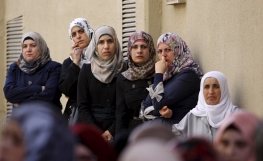
On any day of the week you will hear boisterous public services and songs on the men's side of the partition. Faint whisperings are usually all that can be heard from the female side, however, as women not allowed to sing in public according to Orthodox ruling.
So, yes, women are allowed to pray at the Western Wall, but their actions are prohibited. They are not able to pray and worship freely.
Who is fighting for men and women to pray together?
The two main alternatives to Orthodox Judaism, Conservative and Reformed Judaism, both seek to change the way that women are restricted at the Wall. They do not agree with the Orthodox position on women remaining silent during worship.
The fight so far has been pioneered by The Women of the Wall (WOW), a group set up over 25 years ago with the sole purpose of changing "the status-quo that is currently preventing women from being able to pray freely at the Western Wall". They hope to secure women's ability to sing, read the Torah aloud, and wear religious garments such as the tallit, tefillin and kippah.
They have fought for this by various means, including holding monthly prayer services on Rosh Chodesh, donning religious garb and carrying the Torah. Their first meetings in the 1980s were met with violence, as protesters threw chairs and tear gas at worshippers. But their campaign has had significant successes; in May 2013 a judge ruled that WOW prayer gatherings were not illegal, and the first service held after this ruling was attended by 400 people. In 2014, members became the first women to light menorahs at the Western Wall and then in April last year, some read from a full-size Torah at the site for the first time. (Torahs are usually stored in the men's section, which is not open to women, but a number of men smuggled them over).
The Women of the Wall have agreed they would move their monthly service to the egalitarian prayer space. This was not accepted by all members of the movement, though, and some have subsequently split off to form a splinter group. However, the mainstream Women of the Wall have sought to work with the change which is promoting the egalitarian treatment of worshipers.
How likely is it that a unisex prayer space will actually happen?
A source close to the proceedings told Haaretz that the probability of the legislation passing was about 50/50, while another observed that "whatever happens, there is clearly a lot of goodwill on all sides."
There are a number of logistical issues remaining, such as what size the egalitarian prayer space should be. Also up for debate is the control of the "upper plaza", which is an area of the site that is not currently part of a prayer section. Rabbi Shmuel Rabinowitz, who looks after the Western Wall, is yet to accept the upper plaza as a national site. If he were to, military ceremonies involving both men and women would be held there.
If the vote goes through on Sunday, it will change the face of the holiest site in Judaism. It will mark a significant shift toward egalitarianism in Israel, opening up the Western Wall to non-Orthodox Jewish tradition, and pointing towards a cross-denominational tolerance.