U.K. lumps Russia together with ISIS and Ebola virus as major threats to its national security

The United Kingdom has tagged Russia as the biggest threat to its national security alongside the Islamic State (ISIS) and the Ebola virus.

In its latest list of potential threats, Britain cited Russia's increasing aggression, in particular President Vladimir Putin's "willingness to display force,'' as having unnerved its defence security network, the Daily Express reported.

Global terrorism, radicalisation by the ISIS and other extreme groups, migration crisis and global health threats like Ebola also made it to the list.

The new roster of potential threats was put together by the British government after a major security review that the U.K. performs every five years. It is expected to become a key part of the U.K.'s National Security Strategy which Prime Minister David Cameron is expected to announce on Nov. 23, according to The Sunday Times.

According to the report, Russia made it to the top spot due to the Ukrainian crisis. The crash of a Russian Airbus 321 jet in Egypt's Sinai Peninsula also reportedly added to British security concerns.

"Russia's actions in Ukraine have introduced question marks over the role and future of NATO operations in neighbouring countries and re-awakened the threat posed by Russia to states in Eastern Europe and the Baltic, some of which are NATO and/or EU member states,'' the Strategy document said, according to the Times.

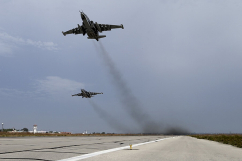
Moscow's increased involvement in the Middle East, such as Russian airstrikes against terror targets in Syria, renewed flights by strategic bombers, and submarine activity in the north Atlantic have also alarmed the U.K. leadership.

In addition, the country's increasing isolation in international politics, increased military spending and apparent willingness to display force in the face of universal condemnation "suggest the next five years could well see an escalation of the Russian threat to the security of Western Europe.''

In the previous security strategy released in 2010, Russia was not mentioned as a threat, The Daily Mail noted.

Another country that has unnerved U.K. authorities is China, which it claimed is responsible for "authoritarianism and persistent human rights abuses.'' The strategy likewise cited as concerns in the escalating tensions in the South China Sea and China's closer relations with Russia.

The ongoing migration crisis in Europe as well as climate change and organised crime; the global increase in religious fundamentalism and intolerance across religions are also among those considered major concerns in Britain.

"In particular Islamic separatists and fundamentalists are now seen a serious threat in destabilised parts of the world,'' said the report.

The other danger that made it to the list is the rampant health epidemic such as the Ebola crisis this year, which killed more than 11,000 people worldwide mostly in Guinea, Liberia and Sierra Leone in South Africa.

As of August 2015, there were 28,041 Ebola cases reported globally, according to the World Health Organisation (WHO).


related articles
Obama gets warning from Russia, draws rebuke from Republicans, Dems for move to deploy \'less than 50 troops\' to Syria
Obama gets warning from Russia, draws rebuke from Republicans, Dems for move to deploy 'less than 50 troops' to Syria

US President Barack Obama drew a barrage of criticism from both Republican leaders and his own Democratic party mates following his decision to deploy fewer than 50 Special Operations forces to Syria to lead the fight against hundreds if not thousands of battle-hardened Islamic State (ISIS) militants, various reports said.

Russian jets hit ISIS in Palmyra

ISIS-held areas around the ancient city of Palmyra have been targeted by Russian jets as part of Moscow's ongoing bombing in Syria.

Russian airstrikes not hurting but actually helping ISIS — UK defence analyst

Contrary to what Moscow would like the world to believe, Russian airstrikes in Syria are not only not hurting the Islamic State (ISIS) but are actually helping the jihadist group, a leading British defence analyst disclosed.

U.K. deals blow to U.S.-led fight against ISIS as Cameron drops plan to join Syria airstrikes

Dealing what could prove to be a significant blow to the U.S.-led coalition battling Islamic State (ISIS) militants in Iraq and Syria, British Prime Minister David Cameron has reportedly dropped plans for a parliamentary vote on extending British airstrikes to ISIS positions in Syria.

Russia faces athletics bans for widespread doping

Russia could be banned from international athletics, including the 2016 Olympic Games, after an anti-doping commission report on Monday alleged widespread corruption and collusion that added up to a state-sponsored drugs culture in a sporting superpower.

News
Faith in difficult times: lessons from 1930s Britain

Architectural historian Steven Brindle talks to Christian Today about the faith that shaped 1930s Britain, the churches that supported struggling communities and what lessons the decade might have for us today.

Campaign aims to mobilise 500,000 Christians for Christmas outreach

Shine Your Light is aiming to mobilise half a million Christians to share the gospel with five million people across the UK this Christmas, with more than 2,000 churches already signed up, organisers say.

The Church of England should repent for previous calls to ban 'conversion therapy'

The Church of England's uneasiness about the government's ‘conversion practices’ bill is a perfect lesson in the old adage, 'be careful what you wish for,' writes Dr Martin Davie.

Leaked Home Office report links 'Christian extremism' to traditionalist beliefs and immigration concerns

An internal Home Office report lists concerns about immigration, multiculturalism and changing social values among the characteristics associated with what it calls "Christian extremism", it has been reported.