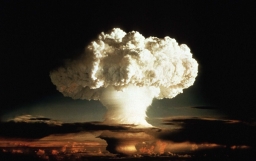
The overall cost of replacing and maintaining Britain's nuclear deterrent will reach £167 billion, much more than expected, according to an MP's and Reuters' calculations based on official figures.
The Scottish Nationalist Party, which wants Britain's Scotland-based nuclear-armed Trident submarines scrapped, called the sum "unthinkable and indefensible" at a time when deep cuts under the government's "austerity" policies mean "thousands of people across the UK are struggling to afford basics like food".
Some military officials also oppose investment in Trident, saying the money would be better spent on maintaining the army and on more conventional technology, which have also faced cuts.
Until now, Prime Minister David Cameron's government has said replacing the ageing fleet of four submarines which carry nuclear warheads to provide a continuous at-sea deterrent would cost an estimated £15-20 billion.
It has as yet given no official estimate of the cost of its replacement and maintenance.
Critics have previously said Britain will need to spend £100 billion, a figure based on a 2014 report by the independent Trident Commission.
In a written parliamentary response to Crispin Blunt, an MP in Cameron's Conservative party, Minister of State for Defence Procurement Philip Dunne said on Friday the acquisition of four new submarines would cost £25 billion.
He added that the in-service costs would be about six per cent of the annual defence budget over their lifetime. The total defence budget for 2014/15 reached £33.8 billion and rises to £34.1 billion in 2015/16, according to the ministry.
"My office's calculation based on an in-service date of 2028 and a missile extension until 2060...the total cost is £167 billion," Blunt told Reuters.
"The successor Trident programme is going to consume more than double the proportion of the defence budget of its predecessor...The price required, both from the UK taxpayer and our conventional forces, is now too high to be rational or sensible."
His figure was based on a presumption that Britain will spend two per cent of its annual gross domestic product (GDP) on defence, as Cameron's government has promised.
It also uses existing official government and International Monetary Fund figures, and an assumption of GDP growth of an annual average of 2.48 per cent between 2020 and 2060.
Using the same figures, a Reuters calculation came to the same sum of £167 billion.
Asked about the rising cost, a spokesperson for the Ministry of Defence said the government had published an unclassified version of a review on alternatives to Trident which "demonstrated that no alternative system is as capable, or as cost-effective, as a Trident-based deterrent".
"At around six per cent of the annual defence budget, the in-service costs of the UK's national deterrent...are affordable and represent an investment in a capability which plays an important role in ensuring the UK's national security," the spokesperson said.
"Dangerous obsession"
The deputy leader of the SNP, Stewart Hosie, took aim at the Conservatives, saying the new figure showed "just how dangerous the Tories' obsession with nuclear really is".
"This is truly an unthinkable and indefensible sum of money to spend on the renewal of an unwanted and unusable nuclear weapons system," he said in a statement.
The SNP's popularity has surged since Scots rejected independence in a vote last year, with millions of supporters won over by its anti-austerity message and criticism of Trident.
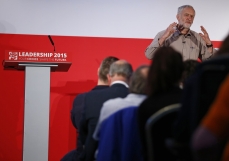
The Labour Party had been a supporter of renewal but its new leader, far-left veteran lawmaker Jeremy Corbyn, an anti-war campaigner, is opposed to the plans.
He was widely quoted last month as saying he would not be prepared to use nuclear weapons if he became prime minister.
Spiralling costs are likely to reinforce Corbyn's opposition and possibly alarm many in his party who support renewal.
The new figures tally with comments this month by Jon Thompson, the top civil servant at the Ministry of Defence, when he described the project to replace the nuclear deterrent as a "monster".
"That's the project that keeps me awake at night the most," he told parliament's Public Accounts Committee.
"It's the biggest project the Ministry of Defence is ever going to take on. If the government were to proceed with renewing the deterrent then in due course that would exceed £5 billion a year. That is a significant proportion of the defence budget and it's an incredibly complicated area."
He added that it was extremely difficult to estimate what the future costs would be.
A final decision on replacing the existing vessels carrying the Trident missiles – four Vanguard-class submarines – is due next year and Cameron says he will press ahead with the renewal.
In August, the government said it would spend more than £500 million refurbishing its Faslane naval base in Scotland.
"I think it is right to maintain our independent nuclear deterrent and anyone who has any doubts of it only has to look at the dangers and uncertainty in our world," Cameron told parliament on Wednesday.
In a speech last week, Defence Secretary Michael Fallon said global threats meant renewing Trident was vital.
"I appeal to all moderate MPs to put our national security first and to support building four new Trident submarines," he said. "Spread across the 30-year life of the new boats, this represents an annual insurance premium of around 0.13 per cent of total government spending."