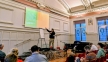
Archbishop of Canterbury Justin Welby has praised the media for its 'challenge and scrutiny' and for the role it plays in a democratic society, while reminding journalists that "for all its faults", the Church is full of good news stories.
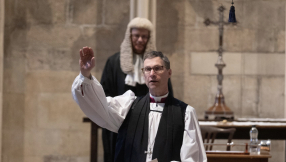
Speaking yesterday in London at a conference organised by the Religion Media Centre, the Archbishop explained: "The Church, being full of human beings, is full of those who go wrong. The Church often seeks to speak truth to power, but we must recognise as different bits of the Church, and, speaking as the Church of England, our own power as well as our immense failures and sins.
"And therefore, we should welcome the challenge and scrutiny from the media that is part of living in a democratic society. Having spent a good deal of my life travelling in places that don't have those freedoms, I know which I prefer."
Archbishop Welby – who has come in for sharp criticism from some parts of the media for his challenge to the government's immigration reforms – explained, "When I started this job just over 10 years ago, the media landscape, even that short period ago looked different. It has become faster, more complex, more driven by social media.
"In an age of misinformation, distraction, and the competition of noise with truth, it is ever more difficult for journalists to do their job."
He said that his approach to the media had developed over the 10 years he had been in office: "I take more risks, deliberately rather than accidentally. I try to engage and I recognise the vital importance of seeking to communicate well what the Church is doing and what we actually care about.
"I try to say yes to as many media outlets as possible, especially the local and the regional. I know how successful they are because they are deeply embedded in the community."
But Archbishop Welby admitted, "One of the relatively few things I'm looking forward to in my eventual and long distant retirement is being able to read the paper without worrying about whether I'll see my own name, in any context at all."
He conceded that the Church and the media have different perspectives on what makes 'good news,' telling the audience of people who work in and with the media, "what the Church calls Good News and what journalists call good news are entirely different things."
"The Christian Gospel, which is a word meaning 'good news', is that the Creator of all things, God, so loved the world that He gave His only Son so that all who believe in Him should not perish but have life now and eternally. To put it another way, God who is just provides salvation.
"And what that means in practice, is a worldview that trusts the faithfulness of God. At the same time, Christians live in a God-created community, the Church – and that is the rub."
Describing his own experience of working with the media, Archbishop Welby explained: "There are two aspects to any religious figure's involvement in the media. First, you're reported on - for example, after making a speech on the Illegal Migration Bill.
"Secondly, there is the context of engaging with the media proactively and giving interviews or engaging on social media. There's a difference. So if we start off with engaging with the media, why do it?
"The greatest single reason," he explained, "is that Christian faith claims truth. For Christians, truth is not a concept, it is a person - Jesus, not an idea. When in John, Chapter 14:1-6, one of Jesus's disciples expostulates with him when he says, you know where I'm going, and the disciple says to Jesus, I haven't the faintest idea what you're talking about. And Jesus replies, I am, the Way, the Truth and the Life.
"When Pilate, at his trial says what is Truth? He's asking the wrong question. He should ask who is Truth - and Truth is standing before him, beaten and bloodied, and looking anything but impressive."
The Archbishop challenged his audience, "Please, in your reporting, don't forget the millions of people and the incredible stories that the Christian church, and even the Church of England represents. Because I think that is also good news for all its faults, both for journalists, and Christians."
Rev Peter Crumpler is a Church of England minister in St Albans, Herts, UK, and a former communications director with the CofE.