Bishops in the Diocese of Southwark have said that “the gospel is for everyone” and have denounced “Christian nationalism” as having no biblical justification.
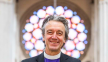
Rosemarie Mallett, Acting Bishop of Southwark, Martin Gainsborough, Bishop of Kingston, and Alastair Cutting, Bishop of Woolwich, made a joint statement after being made aware that members of the Patriot Platform movement have been attending a church in the diocese.
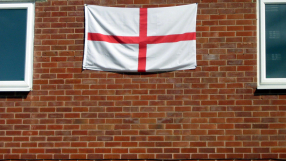
Patriot Platform is associated with Danny Tommo and groups that have staged protests against illegal immigration into Britain, particularly via small boats crossing the English Channel.
In their statement, the bishops said that “concerns” had been raised about “the language and actions of this group and how they are proclaiming the Christian faith in association with anti-migrant rhetoric”.
The bishops said: “We believe that the gospel is for everyone - that we all need God and that those who seek him in faith will find him.
"Nevertheless, we - alongside the leadership of the church in question - deplore any kind of violent or menacing behaviour, behaviour which is contrary to the law, or which denies the dignity and rights of others.
"We find in the Bible no grounds for the justification of Christian nationalism.”
The Church of England hierarchy in particular has come out strongly against Christian nationalism, while other Christian groups have given a more nuanced view.
Earlier this month Marsha de Cordova, Second Church Estates Commissioner and a Labour MP said that Christian nationalists “are neither patriots nor Christians”.
Oxford theologian Lord Biggar, while not endorsing the position, has warned against tarring Christian nationalism with such a brush, arguing it could be “evidence of a kind of spiritual hunger”.
Giving its own take, the Evangelical Alliance has said that there are “four orientations” of Christian nationalism, including genuine Christians who are also nationalists, those nostalgic for Britain’s Christian and national culture, those who see Britain as a Christian nation with a divine calling, and those who are nationalists and simply use Christian symbols to further their agenda.
A poll conducted earlier this year suggested that a quarter of British Christians identify as “Christian nationalists”, although the survey revealed a sharp disagreement about what Christian nationalism actually is. While some felt it to mean restoring the country’s faith, others believed it was about ending abortion and solidarity with the persecuted church. Others still believed it to be a cover for racism.