
|PIC1|The election of four women to Kuwait’s parliament, the first for the Gulf Arab state, could help improve the situation for Christians and other minorities in the Middle East, said an expert on Islam and human rights.
“Kuwait itself is usually seen as moderately ‘progressive,’ and I think this is a big deal,” Dr Paul Marshall, senior fellow at the Hudson Institute’s Center for Religious Freedom, told The Christian Post.
“If the elected women do a good job, they can open things up more – and the role of women is key in the Middle East.
“So, I would say that it also bodes well for Christians and other minorities.”
Last weekend, four women won seats in Kuwait’s parliament despite fierce opposition from some conservative Muslim quarters. Aseel al-Awadhi, one of the elected women, said Sunni Islamist politicians called her an “infidel” during the campaign and used dirty political tricks to defeat her, including taking her lectures out of context to give the impression she was against sharia law, she told National Public Radio.
“They created a very intense propaganda campaign, and a very negative one,” she said.
Awadhi, a US-educated philosophy professor at Kuwait University, said that now that she and her female colleagues had been elected to parliament, women’s voices can finally be heard.
She also said she plans to challenge laws in Kuwait that do not treat women equally.
US Secretary of State Hillary Clinton called the elections of the Kuwaiti women a “major step forward” for Kuwait, the region and the world.
“This did not come easily or quickly,” said Clinton, a strong women’s right advocate, to graduates at Barnard College, a women’s university in New York City, according to Agence France-Presse.
"It took a long struggle but the election of four women this Saturday is a major step forward for Kuwait, the region, and I would argue, the world," said the US’s top diplomat.
Women in Kuwait were not allowed to run for office until 2005. Despite several women running for office in the previous two elections, no women won a position until this year.
This historic election occurred after Kuwait’s ruler, Emir Sheikh Sabah al-Ahmad al-Sabah, dissolved the outgoing parliament due to a deadlock between parliament and the government.
Marshall, who has met some of the elected Kuwaiti women when he was an observer at the country’s elections in 2003, commented that the push for women’s rights has come mainly from the country’s ruler who is more “progressive” than the population at large.
“It was he who pushed for women to have the vote, even though most of the parliament opposed it,” the human rights scholar said.
Political gains made by women as well as liberals in this election came at the expense of Sunni Islamists, who had previously dominated without serious opposition in parliament. Although Sunni politicians still make up the majority of parliament, the election gave liberals, independents, and women greater representation.
Analysts say the latest electoral shift is likely due to citizens’ fatigue with the constant fighting between parliament and the government. But they also warn that tension is likely to continue since many Sunni incumbents retained seats.
Kuwait is the world’s fourth largest oil exporter. Although it has a constitutional emirate government system, it politically resembles Western democracy more than any other nation in the Gulf Arab region.
-

New pilgrimage route follows in the footsteps of the Manx Bible translators
-

Survey finds Gen Z most likely to identify as religious
-

Christian social worker returns to Court of Appeal in dispute over withdrawn job offer
-

Australia's anti-therapy laws harm the most vulnerable - Britain should not copy them
News
-

Edinburgh University ends divinity programmes as theology faces a changing future
-

What links Tommy Robinson, Andrew Tate and the CofE’s newest diocesan bishop?
-

Third of young people now turning to AI for friendship, research finds
-

Why the Archbishop of Canterbury’s award controversy matters
-

Catholicism in France has 'collapsed'
-

From Genesis to Revelation: The ambitious AI project turning the Bible into music
Most Popular
News

Why New Age spirituality isn’t neutral
The problem is not the recognition that there is more to life than what we can see; Christianity agrees that there is. The question is where we go looking for answers.
More than one in four US Protestant churchgoers believe some biblical truths become outdated
US Protestant churchgoers who hold evangelical beliefs are more likely than their non-evangelical counterparts to express confidence in the Bible and its continuing authority, according to new research from Lifeway Research.

Cost of living crisis is ‘busting family budgets and increasing social isolation for children’ - report
Rising living costs are forcing many UK parents to reduce activities for their children and, in some cases, use child benefits to cover household essentials, according to new research from Child Poverty Action Group (CPAG).
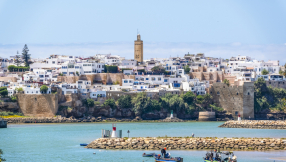
Religious freedom in Morocco is ‘substantively limited’, report warns
A new report has questioned Morocco’s claims to religious tolerance, arguing that laws relating to Ramadan observance, burial and conversion continue to limit freedom of religion despite constitutional protections.








