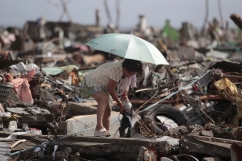
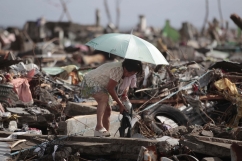
Six months on from the deadliest typhoon ever to hit the country, aid agencies are helping people in the Philippines to rebuild.
More than 6,000 people died when Typhoon Haiyan struck in November. Five million saw their homes severely damaged or destroyed.
To begin with, aid agencies focused on providing emergency relief. Now they are combining this with longer-term sustainability in the Philippines. More than two million people are still living in temporary homes or with relatives; a situation which is becoming more urgent as the rainy season begins again in June.
The Philippines is the world's largest producer of coconuts, which are a vital part of its economy. Haiyan destroyed or damaged 90 per cent of the Philippines' coconut trees, affecting about a million coconut farmers.
According to Mel Smith, Christian Aid's press officer who spent three weeks hardest hit areas of Samar and Leyte in the immediate aftermath of the typhoon, almost half the population is classified as living below the poverty line.
"Since Haiyan Christian Aid and its partner organisations have reached more than 185,000 people in some of the mosst affected and isolated areas with food, sleeping mats, water, blankets and shelter kits. We are now helping people to find jobs and rebuild their communities. Haiyan...destroyed homes, jobs and whole communities," said Smith.
After providing initial emergency relief including emergency food packs for approximately 15,000 families, the Salvation Army is also now focusing on longer-term development, such as providing quick-growing vegetable seeds for farmers who lost all their crops in the typhoon.
Major Ray Brown, International Emergency Services Coordinator, said: "After the initial relief effort the idea is you don't want to go on for too long as you could create dependency. So we have looked to provide long-term practical support that will help people in the future. We always listen to what the people themselves want as well. Even in the early weeks you need to be thinking about long-term recovery and what activities would really help people."