
The Disasters Emergency Committee has admitted that there are still severe challenges in bringing aid to survivors of the January 12 earthquake that struck Haiti.
According to DEC, which includes Christian Aid and CAFOD, the British public has donated around £101 million towards the relief effort, enabling aid agencies to bring emergency assistance to some 1.2 million people.
In the last six months since the disaster, aid has mostly been spent on meeting the most urgent needs, including providing clean water, sanitation facilities and adequate shelter.
DEC admitted that it was still faced with an “enormous challenge” in providing survivors with new jobs, decent accommodation and better public services.
DEC Chief Executive Brendan Gormley said the aftermath of the Haiti earthquake was the worst humanitarian crisis he had seen in his 35-year career.
“Providing decent shelter in a city choked with millions of tons of rubble is proving enormously difficult,” he said.
“People will need jobs to pay rent on properties that have yet to be repaired or rebuilt, at sites that have yet to be cleared, where the ownership of every scrap of land is likely to be hotly disputed.
“It is clear that we are only at the beginning of what will be a long and painful journey but that I know DEC member agencies are committed to do whatever is necessary to support the people of Haiti.”
He remained optimistic about progress in the long term as he noted that aid had already helped improve some aspects of life for those living in capital Port-au-Prince, which was devastated by the earthquake.
Even before the earthquake struck, only half of the people in Port-au-Prince had access to latrines and only one-third had access to clean tap water.
Aid agencies are running ‘cash-for-work’ schemes to rebuild public services and have already built some 3,000 latrines.
Mr Gormley said: “Shockingly, our provision of emergency latrines and clean water means that many people now have better water and sanitation services than before the quake.
“One measure of our achievement is that there has been no major outbreak of potentially deadly diseases such measles, cholera or diarrhoea.”
DEC has committed to remaining in Port-au-Prince for the next three years.




-

Edinburgh University ends divinity programmes as theology faces a changing future
-

Why the Archbishop of Canterbury’s award controversy matters
-

More than one in four US Protestant churchgoers believe some biblical truths become outdated
-

Catholicism in France has 'collapsed'
-

Christian leaders issue ‘sober and urgent call’ for Western Church to prepare for disruption
-

Australia's anti-therapy laws harm the most vulnerable - Britain should not copy them
Most Popular
News

Active faith linked to happier marriages and lower divorce rates, study finds
People who regularly attend church are more likely to report happy marriages, according to a new report examining the relationship between faith and family life.
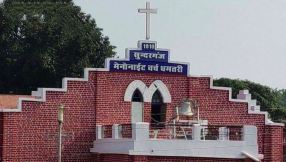
Indian churches fearing anti-conversion laws tell non-Christians: enter at your own risk
Churches in Dhamtari, a town in the central Indian state of Chhattisgarh, have put up notices warning non-Christians that they enter at their own risk, weeks after a law against religious conversion came into force in the state.

£1k bursaries to help churches develop youth and community mentoring programmes
Churches across the UK are being offered bursaries to help them establish mentoring programmes aimed at supporting young people and others in their communities.

World Evangelical Alliance celebrates 180th anniversary
The World Evangelical Alliance (WEA) has held an online celebration to mark its 180th anniversary. Hundreds of people from more than 22 countries attended, and the event was rebroadcast to accommodate different time zones.








