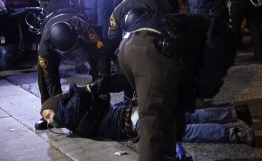
A pledge by President Barack Obama to address race-related problems between police and minorities falls far short of what is needed, and nationwide demonstrations tied to the police shooting of Missouri teenager Michael Brownwill continue to grow, several protest leaders said on Tuesday.
"We're going to continue to take to the streets, we're going to continue to disrupt the daily order ... until something really really happens for the people in our communities, until we see some meaningful reform," Phillip Agnew, a leader with the Dream Defenders youth activist group, said in a conference call with reporters.
Agnew was one of seven protest leaders who met with Obama at the White House on Monday to discuss the unrest that has followed the August shooting of Brown by white police officer Darren Wilson in Ferguson, Missouri. Protesters have blocked highways, temporarily shut down stores and paraded outside government offices in several states.
Protests had been mostly peaceful for many weeks, but exploded on November 24 after a county prosecutor announced that a grand jury had voted not to indict Wilson in the shooting. Two federal civil rights probes are ongoing. Wilson has resigned from the department.
Obama said after Monday's meeting that he would use his last two years in office to address the "simmering distrust" between police and minority communities. He said he would ask Congress for $263 million to help purchase 50,000 body-worn cameras for police to record interactions with the public, and expand training for law enforcement.
The president also said he would set up a task force to study how to improve community policing, and he would consider imposing tighter controls on the proliferation of military-style weapons and equipment provided to many police departments.
Protest leaders said Tuesday the meeting with Obama was a sign that their demonstrations were making progress but they still need to see notable progress in many areas.
Ashley Yates, co-founder of the Millennial Activists United group, said police use of military equipment to quell protests in Ferguson after Brown's shooting was a key problem and many black youth need to be involved in the president's task force.
Protesters said local, state and federal leaders must acknowledge the scope of the racial divide between blacks and law enforcement.
"We are not satisfied by any means," Yates said. "We're definitely going to keep doing the work on the ground."