A team of scientists and researchers have solved the four-year-old mystery of the shards of stained glass anonymously returned to Dunfermline Abbey in Fife.
The shards were delivered to the Abbey Church in November 2020 and addressed to “Bob Brewse”.
They were wrapped in a copy of the Fife and Kinross Extra newspaper, dated 12 February 2005. Also included was a typed note, which read: “Hello there, I am returning some stained glass that I found over 20 years ago. It was in a small pile below the scaffold that was erected by the Abbey, near footpath facing west. I wrapped it up in paper to protect it but never had the chance to return it. Unsure if was new glass going in or old coming out. I felt a bit guilty taking it and hope it will get used. Regards, CEEPS”.
It is believed that “Bob Brewse” is a reference to the renowned king of Scotland, Robert the Bruce, who is buried at the church.
For years no one knew any more than “CEEPS” about the shards, however a team consisting of a Professor of History, a scientist and a PhD student, finally unravelled the mystery.
Michael Penman, Professor of History at the University of Stirling, examined church records for references to damage to the stained-glass windows in the church or to repairs.
He was assisted by Dr Kennedy of the Institute for Sustainable Building Design at Heriot-Watt University, who used scientific analysis to find the ingredients used in the glass, which in turn dated them to a period between 1870 and 1940.
The final pieces of the puzzle were solved by Ms Kelly, a PhD student from the Glasgow School of Art.
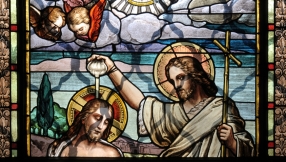
Examining the pieces, she determined that they depicted an angel and a person wearing a noble’s robe. By visiting the church itself, Ms Kelly was able to see that the Margaret Window was in places made of an ever so slightly differently coloured glass and material.
The mystery had been solved.
The Margaret Window depicts the marriage of Queen Margaret and King Malcolm Canmore and was originally installed in 1932.
Ms Kelly said, “When I began my PhD at Heriot-Watt University in October 2024, I never imagined I would stumble upon a mystery linked to Dunfermline Abbey.
“Through this collaboration of science, history, and visual analysis, we determined that all the fragments originated from the first lancet window, where two areas of damage had led to repairs and replacement.”
Intriguingly, there is one final mystery yet to be solved: who is CEEPS?!