
Macedonians voted on Sunday in a parliamentary election seen as a test of the country's political maturity after campaign violence raised fears its slow progress toward European Union membership could be further delayed.
The conservative VMRO-DPMNE party of Prime Minister Nikola Gruevski is expected to win on a surge of nationalist defiance after Greece blocked a NATO invitation to Macedonia in April in a 17-year row over the name it shares with a Greek province.
His government, which will likely have to include a partner from the ethnic Albanian minority parties, will be asked to get NATO accession back on track, start EU membership talks and calm tensions after weeks of violence among rival Albanian factions.
President Branko Crvenkovski has appealed for calm, saying the violence blackened Macedonia's name in the world.
"The first step on the road to the EU and NATO is to have peaceful, fair and democratic elections," Crvenkovski said.
The EU ambassador in Macedonia, Erwan Fouere, said "it would be very important for the country to pass the test if it were to get a recommendation ... for opening (EU) negotiations."
Some 1.77 million people are entitled to vote from the country's 2 million population. Polls close at 7 p.m. (6 p.m. British time), and the voting will be overseen by some 2,000 local and more than 460 foreign monitors.
UNFULFILLED PROMISES
Gruevski's outgoing government was in office for under two years. It was divided over reforms and rights for the country's 25 percent Albanian minority before it was dealt a final blow by the NATO snub.
The West is worried about instability in the Balkans so soon after Kosovo Albanians seceded from Serbia in February, the last shudder in a region that saw a decade of conflict in the 1990s with the collapse of Yugoslavia.
All-out ethnic war in Macedonia was averted in 2001 with promises of quick admission to the Western mainstream.
They have gone largely unfulfilled: ethnic relations are better but the country is still poor, its NATO and EU bids hamstrung by the dispute with Greece, which objects to its name because its northernmost province is also called "Macedonia".
Macedonians refuse to compromise to appease Athens, but Albanians are getting impatient, seeing insistence on the name as romantic nationalism that could hurt their own rights.
Poverty and frustration is fuelling competition for the Albanian vote, spilling over into minor armed incidents between the Democratic Party of Albanians (DPA) and the Democratic Union for Integration (DUI) of former guerrilla leader Ali Ahmeti.
Analysts said great care was needed in the post-election coalition building so as not to foment divisions like in 2006, when the DUI, which won most of the Albanian votes, was left out of the government in favour of their bitter rival, the DPA.
"If one keeps dividing the Albanians, they are not only contributing to their backwardness but also causing Macedonia to be permanently destabilised," said analyst Mentor Nazarko.




-

The dire American political situation: a brief overview for faithful Christians in Britain
-
Conversion therapy ban supporters want prayer to be criminalised - this must not be allowed
-

Why the US election results do not bode well for America
-
Police appeal for witnesses after head smashed off Jesus statue at church war memorial
-

Are we seeing the end of Western civilisation?
-
Archaeologists may have discovered identity of mystery skeleton in Westminster Abbey
Most Popular
News
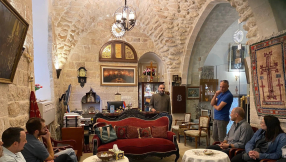
‘Major achievement’ hailed as Israeli officials step in to stop anti-Christian harassment
Harassment against Christian is sometimes justified by appeals to the Jewish religion.

What do Christian young women and men need to know about the opposite sex and themselves?
The first thing that Christian young women and men need to know is that the Bible is the operating manual for humans.
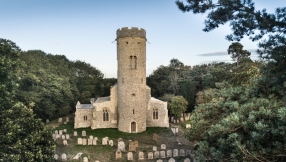
Saxon church saved from Historic England’s ‘at risk’ register after extensive repairs
Historic England has added 197 sites to its Heritage at Risk Register. However it has also managed to save dozens of buildings, including a 1,000-year-old church.
Trump’s midterm defeat and its implications for Christians on both sides of the Atlantic
America’s power and influence on the world stage, combined with Trump’s unpredictability and volatility, is a worrying mix.





