The leading authority on Islam in Turkey has condemned the Pope as "immoral" for describing the killing of 1.5 Armenians in 1915 as genocide.
Mehmet Görmez, head of the presidency of religious affairs in Turkey (making him the most senior scholar and Islamic cleric in Turkey and Northern Cyprus) said the Holy See should look to itself before "casting stones" at others.
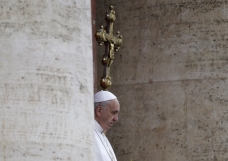
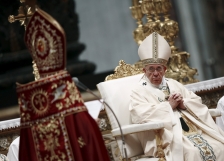
The Pope prompted a diplomatic row when, in remarks to commemorate the Armenian killings, he described the massacre as genocide. Turkey hauled in the Vatican's envoy for a dressing down, and recalled its own representative from Rome.
"The Vatican will come out as the biggest loser if we are all giving account for past sufferings and pain caused," Mehmet Görmez told Reuters in an interview.
Thousands of refugees from Syria are currently in Turkey, having fled the depredations of Islamic State. "Is the current situation of millions of Syrian refugees much less cause for concern to the Vatican than what happened during the Armenian deportation? I find the Pope's statement immoral, and can't reconcile it with basic Christian values."
Görmez criticised rising Islamophobia in Europe which he blamed on a weak economy and difficulties integrating immigrants. He said: "Islamophobia should be considered a crime against humanity, just like anti-Semitism."
Görmez also said violence carried out by groups such as the self-proclaimed Islamic State of Iraq and al-Sham (ISIS), Boko Haram, Al Shabaab and al Qaeda was a consequence of ignorance and poverty, as well as of the exploitation of the Middle East and Africa for two centuries. But he said in addition that the Koran should not be used to validate violence.
"Islam was a religion creating civilisation throughout history. When educating Muslim children, clerics should reflect on the comparison between that and today's Koranic interpretations that incite violence," he said.
The debate has been prompted by the 100th anniversary of the World War One massacre by Ottoman Turkish forces, which is this Friday. France, the European parliament and Pope Francis use the term "genocide" . Turkey says they were not genocide because the killings were not the result of an order from above or an organised campaign.
United Nations spokesman Stephane Dujarric said on Monday that the UN Secretary-General Ban Ki-moon prefers to describe the killings as an "atrocity crime" and not genocide.