Kenya: Almost 100 schools forced to close as Christian teachers fear al-Shabaab attacks

At least 95 schools in northern Kenya have been forced to close after teachers, many of whom are Christians, refused to work fearing attacks from Islamist militant group al-Shabaab.

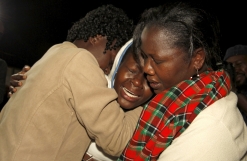
In April, 148 students at Garissa University College were killed by the terrorist group which has conducted a number of deadly attacks in the region in recent years.

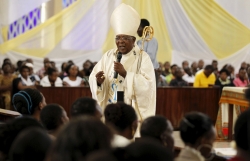
"Teachers left and did not report back, so some schools have since closed down," Joseph Alessandro, Coadjutor Bishop of the Garissa Diocese told Religion News Service.

Jacob Kaimenyi, cabinet secretary for Kenya's Ministry of Education, said that at least 95 public schools have closed indefinitely, and almost another 500 could face the same fate as more than 2,000 teachers have refused to go back to work.

Although the public schools have had to close, Alessandro said the church schools are trying to stay open, even though they have fewer students and teachers.

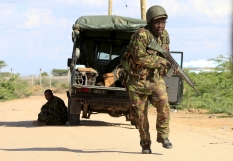
"We are trying our best not to shut down. Parents had asked for security in schools and the government has provided some," he said.

After the Garissa University attack, one head teacher told CNN that al-Shabaab intended to scare the teachers into leaving.

"They want to make sure they terrify the teachers so they go to their homes – so the kids in this area don't get what they deserve," said James Ndonye, head of Ibnu-Siina school, just down the road from Garissa University.

April's attack, which was the group's deadliest attack to date, has only exacerbated existing fears, particularly as the terrorists were said to have specifically targeted Christian students.

Last year 11 of Ndonye's teachers left over fears of an attack by al-Shabaab. In February, 700 teachers went on strike asking to be moved to safer parts of the country.

And their fears are not unfounded; in November last year more than 20 teachers were killed as they travelled home for Christmas when al-Shabaab attacked a bus near the border with Somalia.

Al-Shabaab also attacked the Somali Ministry of Education in April, killing at least six people and wounded several others.

There have been suggestions that the attacks on educational establishments are an attempt to follow the practices Islamist group Boko Haram, primarily operating in northern Nigeria. Schools and universities can often be seen as places of Western influence, and therefore become targets.

Kenya's population is roughly 80 per cent Christian and only 11 per cent Muslim, although the Muslim community is more concentrated in the north-east. Al-Shabaab is particularly active in this area because of its proximity to the Somali border.


related articles
Christian student survived Garissa attack by hiding in cupboard for 2 days

Extraordinary tales of courage and survival are emerging from the Islamist university massacre in Kenya.

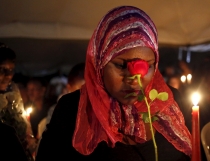
The only way to stop terrorism is by the Gospel transforming would-be attackers - Garissa vigil

Christian students in Nairobi are today fasting and praying for those involved in the attack at Garissa University in eastern Kenya.

Kenyan cardinal calls for crackdown on extremism following Garissa massacre

"The time has come for Kenyans to be more patriotic. Let us all be our brothers' and sisters' keepers," said Archbishop of Nairobi Cardinal John Njue.

Al Shabaab attacks village in Kenya\'s Garissa
Al Shabaab attacks village in Kenya's Garissa

Al Shabaab militants attacked a village in the northeastern Kenyan county of Garissa, the ministry of interior said on Friday.

News
Faith in difficult times: lessons from 1930s Britain

Architectural historian Steven Brindle talks to Christian Today about the faith that shaped 1930s Britain, the churches that supported struggling communities and what lessons the decade might have for us today.

Campaign aims to mobilise 500,000 Christians for Christmas outreach

Shine Your Light is aiming to mobilise half a million Christians to share the gospel with five million people across the UK this Christmas, with more than 2,000 churches already signed up, organisers say.

The Church of England should repent for previous calls to ban 'conversion therapy'

The Church of England's uneasiness about the government's ‘conversion practices’ bill is a perfect lesson in the old adage, 'be careful what you wish for,' writes Dr Martin Davie.

Leaked Home Office report links 'Christian extremism' to traditionalist beliefs and immigration concerns

An internal Home Office report lists concerns about immigration, multiculturalism and changing social values among the characteristics associated with what it calls "Christian extremism", it has been reported.