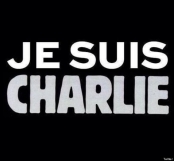
All around the world people have stood in solidarity with those killed in the Charlie Hebdo shooting by holdingplacards and tweeting the phrase "Je Suis Charlie". But now another hashtag is gathering momentum as people tweet #JeSuisAhmed" in honour of one of the police officers killed in the attack.
Ahmed Merabet, 42, was on patrol in the area surrounding the Charlie Hebdo offices when he saw the black Citroen car used by the gunmen as they left the shooting.
Video footage, which has now been removed from the Internet, showed two gunmen get out of the car and one man shot the officer in the groin. As Merabet fell to the ground, he raised one arm, perhaps in surrender. There was a brief exchange between the gunmen and the officer before he was shot at point-blank range.
Charlie Hebdo's form of satire does not sit comfortably with many, but defending their freedom of speech has become a united rallying cry.
As suggestions circulated that Merabet was a Muslim, one man tweeted:
I am not Charlie, I am Ahmed the dead cop. Charlie ridiculed my faith and culture and I died defending his right to do so. #JesuisAhmed
— Dyab Abou Jahjah (@Aboujahjah) January 8, 2015 " data-caption="null" data-credit="null">It has since been re-tweeted more than 19,000 times.
Others have circulated a quotation attributed to French writer Voltaire: "I do not agree with what you have to say, but I'll defend to the death your right to say it."
Little personal information has been confirmed about the officer who has attracted a global outpouring of mourning and support. Some reports say that he was married with two children, others that he was unmarried.
There are also different reports of whether he was actually a practising Muslim. According to the New York Times his parents emigrated from North Africa. The Telegraph reports that his family wanted him to be buried in a large Muslim cemetery in the northeast of Paris.
Aziz Mezine, who works at the Bazar Egyptien where Merabet went regularly at weekends, told the Telegraph that he was "straightforward, modest, super kind. He was adorable ... Everyone liked him."
Mezine added that the attackers had not cared about the officer's religion. "Muslim or not Muslim, they just saw the uniform and killed him," he said. "He was wearing a uniform and representing France, so they don't look at religion."
Despite the few facts known about the officer, the popularity of the hashtag #JeSuisAhmed recognises the desire to distinguish between militant radicalism and true faith; between the extremists who claimed they were avenging Muhammad as they conducted the attack, and the majority of Muslims in France who condemn the attack.