Being a journalist is a dangerous job. Last year at least 61 journalists were killed in the course of their work. Almost half of those were murdered, and the rest died because they were working in situations that were intrinsically dangerous. Journalists also risk being locked up by their political enemies. Peter Greste and his four colleagues from Al-Jazeera have been imprisoned on spurious charges by the Egyptian government for more than 12 months.
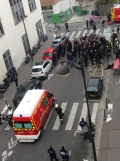
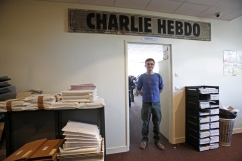
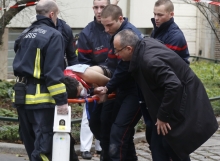
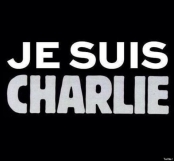
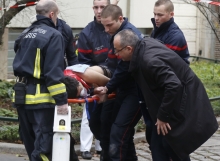
Usually these things happen elsewhere. Most of the journalists who died last year were Arabs working in volatile countries like Palestine, Iraq and Ukraine. But the shocking murder of 10 journalists and cartoonists at the magazine Charlie Hebdo brings the risks of journalism into sharp focus for those who work in the relative security of newspaper offices in London and around the UK. Never was an attack on free speech so literal. France is currently the second most dangerous country in which to be a journalist, after Syria.
It's not surprising that journalists make enemies. The job of a journalist is to find what's going on and tell the rest of us, preferably in an entertaining way. Often that involves exposing hypocrisy, pricking pomposity or revealing what others want to leave concealed, so those journalists who don't make enemies are probably not doing their job right. What is a journalist after all, but someone who tells us the truth that someone else doesn't want us to hear? In that way journalists exercise a vital function on our behalf. Given that journalists write the news it's ironic that they get such a bad press. In the annual MORI ranking of public trust in various professions, journalists consistently vie with politicians for last place. Of course there are corrupt journalists, just as there are corrupt teachers, clergy and lawyers. But at best, journalists are civil servants who undertake investigations on our behalf using the tools of curiosity, objectivity and scepticism.
Satire of the kind that is plied by Charlie Hebdo is a particular kind of journalism. If the role of journalists is to speak truth to powerful people, the job of the satirist is to tickle them under the armpits until they look silly. Satirists hold a mirror up to power, using the tools of ridicule and mockery to say "...or maybe not." Satire has a serious purpose. The UK has a long tradition of satirical journalism in print and broadcast, though much of what we call satire today – the BBC programme Mock the Week, for instance – is really just cynicism. Cynicism is an expression of hopelessness, but satire comes from a refusal to accept the status quo. Cartoons have always been an effective weapon in the satirist's armoury, because a picture, like a parable, can disturb, amuse and offend in equal measure. We laugh at a joke – and while our guard is down, we realise that the joke is on us. And that's why satirists make enemies.
Of course the enemies in the case of the outrageous murder of Charlie Hebdo staff seem to have been motivated by their religion, and in particular by their anger at the magazine's irreverent mockery of the Prophet Mohammed. I'm not a Muslim, but I know how painful it feels when a cartoonist pours scorn on the symbols of my faith, or a journalist exposes corruption in the leadership of the church. There's always a temptation to turn the attack on the messenger, but that's a profoundly unwise thing to do.
Christians, like bananas, have a tendency to bruise easily. We need to toughen up. We need robust satire as much if not more than others do, because we are particularly prone to hypocrisy and pomposity, and we need help to recognise it. We share with the best secular journalists a commitment to investigating and living out the truth, whether or not we find it comfortable. We need to cherish the journalists (and preachers and pastors) who tell us what we don't want to hear, and be very wary of those who tell us what we do want to hear. If you haven't been offended by something you've read recently, you're probably reading the wrong stuff.
Some might ask whether religious belief should have a free pass from journalists purely on the grounds that it is so passionately held and so fundamental to human identity. Why, when they had been repeatedly threatened and asked to desist, did Charlie Hebdo continue to publish cartoons that were so deliberately offensive to some Muslims? But to blame the victims in that way is a bit like suggesting that a victim of rape was "asking for it" because they wore provocative clothing or went to a place where they knew they were in danger.
If we allow the possibility that there are some areas that are off-limits to journalists, some cartoons that should never be drawn, some jokes that should never be told or some movies that should never be released, then we will be the victims of our own fragility. Journalists and satirists like those who died in the offices of Charlie Hebdo are the flawed but courageous prophets of our age, and the loss of them diminishes us all.