Dr Ali laughs sarcastically.
"No, the people are not optimistic," he says, mocking the question. "The people believe that after ISIS there will be another crisis."
Ali, a regional manager for the AMAR Foundation, a charity working in Iraq, shares the pessimism deeply ingrained across the country. "I think there will be another crisis."
ISIS once controlled large swathes of Iraq's western and northern regions but a US-led coalition with Kurdish and Iraqi forces have forced the jihadists back. The group has suffered major defeats in recent months including the loss of the Iraqi city of Ramadi and are about to be pushed out of the country's Sunni bastion, Fallujah.
But Iraqis are still not hopeful.
"Since 2003 we have been seeking stability and we have not found it," Ali told Christian Today.
"Everyone who leaves their house is unsure whether they will return safely to their family. Maybe you will be in the wrong place at the wrong time. You are never sure if you will come back or not.
"This is very difficult. When you lose stability and feel unsafe – it is difficult."
But it is not simply the threat of ISIS that is fuelling Iraqis' sense of hopelessness. Ali explained the country is burdened by a mounting financial crisis that has crippled any economy that had previously existed. Up to 90 per cent of the government's revenue comes from oil and plunging oil prices, combined with the extortionate costs of fighting ISIS, has hit the country hard. Years of fighting has meant there is little infrastructure and even less of a private sector. "You have the burden of the financial crisis on one side," said Ali, "and the lack of security on the other side."
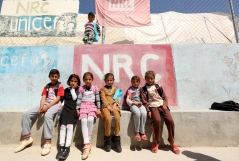
All this comes before the real problem AMAR is trying to tackle. Around 3.4 million Iraqis are internally displaced people (IDPs) – development jargon for people who have lost their homes. They are refugees. But unlike many of neighbouring Syria's refugees, they haven't been able to escape their own country.
Himself a refugee after having fled Saddam Hussein's attacks on Shi'ites 20 years ago, Ali knows the realities. "It is completely desperate," he said. "A very difficult period. I used to ask myself every day and every night if I will ever be able to return to my country and my family."
Now back in Iraq he runs AMAR's regional office and oversees the work of 1,500 people. He described the charity's latest appeal to provide food for the millions of internal Iraqi refugees over the Islamic month of Ramadan. They have asked people of all faiths around the world to host sponsored meal events in their homes. The money raised will buy food boxes which AMAR will distribute across Iraq.
"Their lives have been shattered by Daesh / ISIS," said Baroness Nicholson, the chairwoman of AMAR. "These poor people now call a tent, an old building, or a relative's floor their home. Their savings are running out and it's a struggle every day to find food, clean water, medicine and even clothes."
The charity says that for every £25 raised through the #MyBaghdadKitchen appeal, a family can be fed for a week. Ali hopes the charity's non-discriminatory religious stance will mean it reaches across the bitter sectarian divides that add to Iraq's long list of problems.
"Since the beginning of our work 24 years ago, we decided to be completely liberal. We do not support one party against another. In our offices in Iraq we have a mixture of all different types of people – Sunni, Shia, Christian. We support communities whatever their religious orientation."
Ramadan is a time when Muslims commonly give to charity but Ali says he hopes people of all religions will join the #MyBaghdadKitchen campaign. "I hope you can help us," he said. "We need to restore people as soon as possible."