How the moon was formed: Mars-sized planet collided directly with Earth ages ago, new study says

Ever wondered how the Earth's moon was formed?

A new study strongly points to quite a violent origin: It was a by-product of a direct collision between a planet about the size of Mars called Theia and our own planet when it was still at a young age.

A team of researchers recently reached this conclusion after analysing materials from the moon brought to Earth by the Apollo 12, 15, and 17 missions.

According to the study published on Thursday in the "Science" journal, the striking similarities in the composition of materials from the moon from those in our environment here on Earth strongly suggest that Theia smashed right smack onto our planet.

Edward Donald Young, lead author of the paper and a professor of Department of Earth, Planetary, and Space Sciences at the UCLA, said his team's findings are enough to disprove the current belief that Theia only sideswiped, and did not completely collide with Earth.

"My view is that the issue of Theia content is more or less settled," Young said, as quote by Popular Mechanics.

"The collision was so vigorous, so powerful, so rich in energy that it probably mixed the whole system very thoroughly," Young further explained.

The researchers were particularly convinced after they found out that the Moon shares the same oxygen and some tungsten isotopes in the same ratios as Earth—strong indications that our planet and its lone satellite are composed of the same materials.

Salt-heavy lunar rocks and soil also matched the materials usually found at the bottom of the Earth's oceans.

These could only be possible if Theia completely and directly struck the Earth. The Moon would primarily have contained material from Theia and only a little material from Earth if these two planetary bodies just side-swiped each other.

Despite these findings, Young said more mysteries about the Earth and the moon still need to be answered, including how they established their present rotations and orbits.


related articles
Mars mystery unravelled: NASA finds reason why Red Planet can\'t support life
Mars mystery unravelled: NASA finds reason why Red Planet can't support life

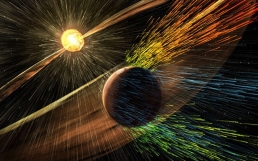
Solar wind carrying charged particles from the Sun may have triggered the thinning of Mars' atmosphere, eventually also causing the Red Planet to lose its ability to support life.

NASA postpones Mars exploration mission next year to 2018 due to leaky instrument

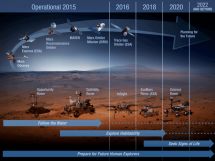
A leaky instrument that may not hold up to the harsh conditions on Mars has prompted the space agency to cancel its InSight (short for Interior Exploration using Seismic Investigations, Geodesy and Heat Transport) mission to the Red Planet next year.

News
International Men’s Day: 5 prayers for the men in our lives

Today is International Men’s Day! To mark this special day, here are 5 prayers I would like to dedicate to all the men in our lives - sons, fathers, brothers, cousins, husbands, fiancés, friends, mentors, leaders, and every man who has touched our lives in one way or another.

South Sudan Christian woman killed for refusing forced marriage to Muslim

Ajak Mabior was allegedly killed by her brother and cousin.

Calls for inquiry in Austria after 22 year old with chronic fatigue died by assisted suicide

Right To Life has called upon the Austrian government to conduct an “urgent review” of its assisted suicide law.

Muslims projected to outnumber Christians worldwide by 2035

Christianity is projected to grow worldwide but lose ground across much of the West, where Muslims and people with no religion are on course to make up an increasing share of the population.