Clean toilets are something we take for granted in the West, but in many of the poorest parts of the world, they are unheard of. In fact, a staggering 2.5 billion people – 40 per cent of the world's population – are forced to live without clean, safe and hygienic toilets.
Uganda has one of the highest primary school drop-out rates in the world; lots of children frequently get ill as a result of poor sanitation, and therefore miss school and fall behind. But the problem is more prevalent among girls. With no clean toilets and sanitary towels too expensive for most families, many girls stay at home for a week every time they get their period, or drop out of school completely.
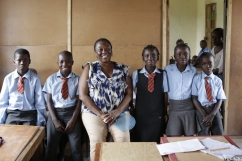
Bridget, 14, attends the Ndago Primary School in Rukungiri district, south-west Uganda. Around 20 girls a year used to drop out of her school, and though Bridget stayed, it's not been an easy decision. Her family are banana farmers and have very little money – they can't afford to pay for sanitary products.
However, under Tearfund's Toilet Twinning scheme, Bridget's school now has a new pit latrine and changing room for girls to use.
"Our old latrines were very disgusting, especially in the rainy season. When somebody would leave, you'd feel sick, and people would be retching, because they would be so smelly," she said.
"When we used to feel sick, we'd miss classes, and that would affect our performance at the end of term exams.
"We now have a very new pit latrine, which is comfortable to use. It has also got a changing room for girls, which helps them when they have their periods, to clean up and go back to class, rather than going home and missing classes."
Bridget's headteacher, Kenneth Mushoborozi, said that there are more than 100 girls over the age of 14 at the primary school because they have fallen behind. They would usually be attending high school by now.
"Many of the girls would miss their mid-term exams, and have to sit them later, or would sit them, but not perform well, because they had missed so much school – and this does affect their end of year grades," he explained.
There are even wider repercussions of bad sanitation. Almost 20,000 Ugandan children under the age of five die of diarrhoea each year, and dropping out of school leaves girls vulnerable to early marriage. Two girls who were married underage in Bridget's district have been killed by their husbands.
Since the new toilet was installed however, 67 girls have re-enrolled at her school, and new teachers have also joined, which means a better education for more children.
"The district have sent more teachers because we have more toilets, so we can take more children on," Mushoborozi said.
Tearfund's partner in Uganda, the North Kigezi and Kinkiizi Dioceses (NKKD) Water and Sanitation Programme, has also been holding workshops to help improve sanitation, and has installed a clean water tap. Now, girls don't have to walk miles for clean water, which previously meant they often missed even more school.
"Before NKKD came, we didn't know about the importance of washing our hands after going to the toilet," Mushoborozi added.
"Because of what the children have learnt at school, the parents will then learn about hygiene too. The children will become ambassadors and will teach their parents about handwashing."
Today, 19 November, is World Toilet Day. For £60, you can twin a toilet at home, work, school or church with a latrine in a poor country. For more information about Toilet Twinning, click here.