The headless corpse of an Egyptian Coptic Christian has been found in Libya after an attack which bears the hallmarks of Islamic State.
The victim, Mansour Saad Awad, worked on a poultry farm near Mechili, in the province of Cyrenaica, near where he was found, says the Fides news service.
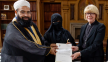
The news broke as Coptic Orthodox Patriarch Tawadros II met the families of the 21 Libyan Christians murdered by Islamic State terrorists in their village of Samalot, where most of them came from. The Patriarch gave death certificates to the families of the victims, certifying their martyrdom.
The murders, which were filmed by Islamic State and widely distributed, shocked the world. The terrorist group has sought to capitalise on the chaos in Libya following the overthrown of Colonel Muammar Gaddafi by Western-backed forces, which has left the country without a functioning government as different militias have battled for control.
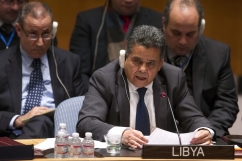
In an effort to assert its authority over warring factions, Libya's official government has now sought permission from the United Nations to import 150 tanks, two dozen fighter jets, seven attack helicopters, tens of thousands of assault rifles and grenade launchers and millions of rounds of ammunition from Ukraine, Serbia and Czech Republic.
In the written request to the UN Security Council committee overseeing an arms embargo imposed upon the North African state, Libya said it needs the massive shipment of weapons and military equipment to take on Islamic State militants and other extremists and to control its borders.
UN special envoy Bernardino Leon on Wednesday warned the Security Council that Islamic State would "stop at nothing" to strengthen its presence.
"The international community must move quickly to present a clearly articulated strategy in support of the Libyan state and the efforts of a national unity government in combating the growing threat of terrorism," he said.
In a recent report, UN sanctions monitors said that Libyan authorities need an international maritime force to help halt the illicit trade in oil and the flow of weapons.
Libya, backed by Egypt, has called for the arms embargo to be lifted. The government is already allowed to import weapons with the approval of the council committee overseeing the embargo imposed in 2011.
Additional reporting by Reuters.