
Prime Minister Gordon Brown has warned that legalising assisted suicide could leave ill people feeling under pressure to end their lives.
Writing in The Daily Telegraph today, Mr Brown said advances in palliative care in the last few decades had weakened the case for any change to the law, something Parliament has already rejected.
“The law – together with the values and standards of our caring professions – supports good care, including palliative care for the most difficult of conditions, and also protects the most vulnerable in our society,” he said.
“For let us be clear: death as an option and an entitlement, via whatever bureaucratic processes a change in the law might devise, would fundamentally change the way we think about mortality.
“The risk of pressures – however subtle – on the frail and the vulnerable, who may feel their existences burdensome to others, cannot ever be entirely excluded. And the inevitable erosion of trust in the caring professions – if they were in a position to end life – would be to lose something very precious.
Mr Brown was writing a day before the Director of Public Prosecutions, Keir Starmer, publishes his final policy clarifying the circumstances under which a person could be charged for helping another person to die. He is expected to say that people who help someone to die on compassionate grounds will not face prosecution.
Although under current law individuals face up to 14 years in prison if they help another person to die, recent high profile court rulings have cast doubt on the law’s position on mercy killings.
The Prime Minister said much of the support for legalising assisted suicide was due to fears over the quality of care available to the dying. He said government had a duty “to minimise the fear of dying badly” by improving end-of-life care.
“I know in my heart that there is such a thing as a good death. And I believe it is our duty as a society to provide the skilled and loving care that makes it possible; and to use the laws we have well, rather than rush to change them,” he said.
Church leaders have made similar calls for palliative care to take precedence over the right to die. At the Church of England General Synod earlier this month, the Archbishop of Canterbury Dr Rowan Williams warned it would be a “moral mistake” to legalise assisted suicide. He said a change to the law would “cross a moral boundary” and leave the vulnerable in society feeling manipulated, harassed or demoralised.
The head of the Roman Catholic Church in England and Wales, Archbishop Vincent Nichols, said in a recent homily that care for the dying should not be guided by fear but by the principles of respect for life and acceptance of death. He called for compassion and a person’s spiritual being to be at the heart of end-of-life care.
-

Christian leaders issue ‘sober and urgent call’ for Western Church to prepare for disruption
-

New pilgrimage route follows in the footsteps of the Manx Bible translators
-

Christian social worker returns to Court of Appeal in dispute over withdrawn job offer
-

Plans afoot for new pro-life group at the UN
News
-

Edinburgh University ends divinity programmes as theology faces a changing future
-

Why the Archbishop of Canterbury’s award controversy matters
-

Third of young people now turning to AI for friendship, research finds
-

Catholicism in France has 'collapsed'
-

Australia's anti-therapy laws harm the most vulnerable - Britain should not copy them
-

Songs of Praise celebrates 65 years with special anniversary episode - and finds a new generation online
Most Popular
News
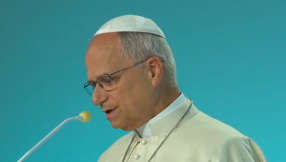
Pope urges Church to find its voice in secular France
France was previously known as the "first daughter" of the Catholic Church.

Church in Wales pauses plans to allow gay marriage
The Church in Wales has pulled back from plans to allow homosexual weddings to take place in churches.

Plans afoot for new pro-life group at the UN
Organisers specifically said they wanted to counter organised LGBT influence at the UN level.

Southwark bishops denounce 'Christian nationalism'
There is considerable disagreement about what "Christian nationalism" actually is.








