Christians must expect to face persecution, according to one Nigerian pastor reflecting on the Garissa attacks a year on.
"God is always just and we should learn to appreciate his will, depend on him for strength, and thank him for the gift of life because there is nothing that can compensate the lost lives of the students," Pastor Daniel, a Garissa-based church leader told International Christian Concern (ICC).
If Jesus was the one most persecuted, then we as his followers must expect to be persecuted also, he said.
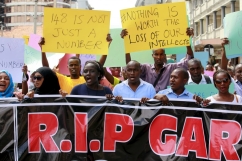
On 2 April 2015, al-Shabaab gunmen raided Garissa University College in northeastern Kenya for more than 10 hours, killing 148 students, most of them Christians.
Pastor Daniel now ministers to students who are coping with the consequences of the attack.
One survivor, Anastaciah Mikwa, said she thanks God she's alive, despite suffering injuries that have left her unable to walk. She has undergone 28 surgeries, but still bears the physical trauma of the attack.
"It's by the grace of God that they missed my head, but they shot me below my waist several times until they made sure I was dead," she told ICC.
"It's by God's mercy towards me to be be alive today."
Anastaciah was the only member of her dormitory to survive the attack. The other three girls were killed after sustaining gun shot wounds to the head.
"When we heard that Garissa University was attacked we were deeply saddened and we were waiting for any news about our daughter," Anastaciah's father told ICC.
"We received a phone call the same day in the evening from the Defense Forces Memorial hospital in Nairobi and informed us that Anastaciah was already in the Intensive Care Unit. This relieved our hearts and we continued to pray for her. We knew she was in a critical condition and anything can happen. We got depressed," he said.
Anastaciah described this year as "my worst ever", and said her family has struggled to take care of her. However, she added: "I know with time I shall overcome this. My legs are getting better every day and now I can stand without the help of my crutches."
Many students who survived the attack have chosen not to return to the university, including Leonard Rotich.
"I lost my closest friends in that attack and I never want to go back to Garissa University again," he said.
"Many of those that died were the first in their family to go to university, only to return home in caskets. Most families are traumatised."