Freedom of worship is 'the invisible line between open and closed societies', according to the foreign secretary, Jeremy Hunt.
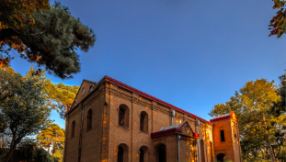
Hunt was speaking at the launch of the review to be conducted by the Bishop of Truro, Philip Mounstephen. He referred to Sunday's bombing of the Philippines cathedral in which 20 people died, saying: 'This was a vivid reminder of the terrible truth that freedom of worship cannot be taken for granted.'
Hunt referred to the recent Open Doors report which found that a quarter of a billion Christians worldwide faced persecution, warning that in China and India this was becoming a 'much bigger issue'.
He said that though Britain was not a 'superpower', it was 'well connected' and could 'give a voice to those who don't have a voice'. Those suffering for their Christian faith, he said, were among the poorest in the world. He told his audience, which included representatives of agencies working with the persecuted church: 'We can't do everything you want, but we will do everything we can.'
Hunt commissioned the review of Britain's approach to the persecution of Christians in December. The review will map Christian persecution in key countries across the Middle East, Africa and Asia, analyse British support and recommend a comprehensive policy response.
Speaking at the launch, Mounstephen – formerly head of Church Mission Society and with a wide experience of global Christianity – said the review would ask 'tough questions' and come up with 'ambitious policy recommendations', though he warned that it would not be possible to achieve everything that was desirable.
He said that because the Christian faith today is concentrated in the global south, it was primarily found among the global poor and the review had nothing to do with 'white Western privilege'.
He stressed that 'persecution is global because Christianity is global', and is not limited to Islamic countries. 'This is not a stalking horse for Islamophobes,' he said. He also said it was not a question of 'special pleading' for Christians but was 'making up for a specific deficit. One minority is on the receiving end of 80 per cent of persecution.'
He concluded: 'The Christian faith has always been subversive, a challenge to absolute power. "Jesus is Lord" was the earliest Christian confession. Saying "Jesus is Lord" meant that Caesar was not. The Christian faith will always challenge those who make absolutist claims for themselves. The challenge to absolute power is a legitimate concern of any democratic government.'