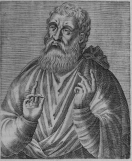
Today is the feast day of St Peter and St Paul. The two biblical figures pioneered the gospel in Rome and they have been jointly celebrated on this feast day since 258 AD.
These guys were so important in the spreading of the good news that their feast day is considered a solemnity - which is the highest order of honour for Roman Catholics - shared by the likes of Jesus' miracles and Mary.
It's not only the Catholics that celebrate. In the Orthodox Church, the day also marks the end of the Apostle's Fast, and is often marked with an all-night vigil. And whether you're Christian or not, if you live in Rome you get a public holiday, because Paul and Peter are the patron saints of the city.
Who were Peter and Paul and why are they so important?
If you're a Christian the names will be among the most familiar in the Bible, but it's always helpful to have a quick recap:
Peter
Peter, whose name was Simon, was a fisherman and one of Jesus' disciples. Jesus renamed him Peter, which means 'Rock', stating that he was going to become the rock upon which Jesus would build his church. Peter was a close follower of Christ, bold in his claims that Jesus was the Messiah and Son of God, but he was also flawed. He denied Christ three times on the night of His crucifixion. However, Jesus redeemed him and stayed true to his promise - Peter was the rock of the church. In Acts, Peter is leading the early church and he travelled to Rome, where he lead the church through persecution. He was martyred in 64 AD and crucified upside down upon his request, saying he was not worthy to die as his Lord. For Catholics, Peter was the first Pope!
Paul
Responsible for a large chunk of the New Testament, Paul wrote countless letters, mostly to gentile believers. Before he was Paul, his name was Saul: he was a Jewish Pharisee who horrendously persecuted early converts to Christianity, until he had had a dramatic encounter with God on the road to Damascus. He'd been travelling there to do some more persecution, when he was surrounded by a great light from heaven which blinded him. He then encountered Jesus Christ, was baptised and had his sight restored. From this point on he took the name Paul and was an unstoppable force for God. He ended up in Rome, where he was beheaded in 67 AD.
Why don't they get a day each?
Most saints share a day with another saint. Tradition has it that these two landed together because they were both martyred by Emperor Nero around the same time.
Church father St Augustine of Hippo wrote in a sermon in 395 AD of the pair: "Both apostles share the same feast day, for these two were one; and even though they suffered on different days, they were as one. Peter went first, and Paul followed. And so we celebrate this day made holy for us by the apostles' blood. Let us embrace what they believed, their life, their labors, their sufferings, their preaching, and their confession of faith."
Ok, so we know who they are. And why they are celebrated together. But, how are they celebrated?
It's a pretty major holiday in Rome - shops and schools are shut and many get a day off work. Instead, people spend the day celebrating in both religious and secular festivities. The Pope gives a homily during a special mass, where he gives a Pallium to archbishops who have been appointed in the last year. A pallium is a special piece of clothing which symbolises the unity between the Pope and Catholic Church. A bronze statue of St Peter also gets spectacularly dressed up with traditional attire including a ring and a tiara and a rather large red cloak.