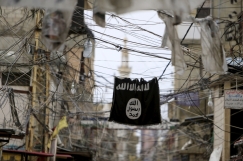
Residents of the ISIS-controlled city of Fallujah, Iraq, have been forced to eat soup made from grass, as the besieged city starves without aid.
"The people of Fallujah are besieged by the government, trapped by ISIS, and are starving," said Joe Stork, deputy Middle East director at Human Rights Watch (HRW).
"The warring parties should make sure that aid reaches the civilian population."
Fallujah, known as the City of Mosques, is just over 40 miles from Baghdad and has been under ISIS control for over two years. When nearby Ramadi was liberated last December, Fallujah was left isolated in ISIS control and as a result is suffering serious shortages. Many residents are hungry, malnourished and unwell. Tens of thousands of civilians from an original population of over 300,000 remain in the city.
ISIS prohibits use of mobile phones and the Internet, so it is difficult to access residents of the city. HRW was able to speak with one person living there and to seven others from the area in contact with residents.
Researchers head that families are being forced to eat flat bread made with flour from groud date seeds and soup made from grass. The food that is available is being sold at extortionate prices. A bag of sugar costs US $500 and a sack of flour $750, according to one resident.
A list of 140 people who had died from starvation over the last few months, including many elderly people and young children, was given to HRW by an Iraqi official. The names of the dead were not shared for fear of punishment by ISIS, who prohibit contact outside the city walls.
A Facebook account "Fallujah is my city" posted a video on March 23 showing several lifeless bodies in a body of water. Included among them was a mother who drowned herself and her two starving children, as she could not feed them.
Residents of the city are unable to escape. An Iraqi lawyer who was in contact with people in Fallujah told HRW that ISIS executed a man for trying to leave on March 21.
"He walked straight up to the ISIS checkpoint and told them he wanted to leave because he couldn't take the situation any longer. ISIS brought him into town and executed him," said the lawyer.
"Islamic State has shown utter disregard for protecting civilians in conflict," said Stork. "It should not add mass starvation to its miserable record and should immediately allow civilians to leave Fallujah."