Loneliness is a key motivation behind the majority of those seeking, and receiving, euthanasia in Holland, a new report has found.
Research by the National Institute of Health found that 37 of 66 cases (56 per cent) of people killed by euthanasia between 2011 and 2014 for so-called psychiatric reasons had cited "social isolation" as a key motivator.
The law in Holland states that euthanasia is only legal if the person is suffering unbearably from an untreatable condition.
Fifty-six per cent of patients reported having refused at least one kind of treatment, and half of those had refused said treatment due to "lack of motivation".
The US-based research, published in the JAMA Psychiatry journal, also found that euthanasia clinics were willing to over-ride decisions made by family doctors who had deemed euthanasia was not justified.
Holland was found to essentially be operating an on-demand euthanasia service, in which patients were "shopping" for doctors who were willing to provide the lethal injection.
One case, cited by the author of the report, psychiatrist Dr Scott Kim, was that of a woman killed by lethal injection who had no physical or mental ill-health, but felt lonely after her husband died earlier that year.
The author suggested that further investigation was needed to determine whether regulations were effective. "The retrospective oversight system in the Netherlands generally defers to judgements of the physicians who perform and report EAS (euthanasia and physician-assisted suicide)," the report said.
"Whether the system provides sufficient regulatory oversight remains an open question that will require further study."
The research led to renewed warnings from UK politicians and campaigners that it was not possible to effectively regulate either euthanasia or assisted suicide.
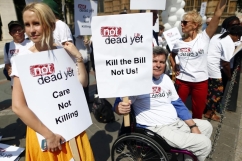
The report "makes for chilling reading... and makes a compelling argument for why MPs, peers, doctors and disability rights advocates in the UK consistently resist any attempts to legalise assisted suicide or euthanasia," Alistair Thompson of Care Not Killing told Christian Today.
"The Dutch system echoes the research done in the state of Oregon which found that very, very few people wanted to end their lives because of the medical condition and its symptoms, and so here we have two different evaluations of assisted suicide and euthanasia systems that both show why they do not work and why they are not the norm anywhere in the world."