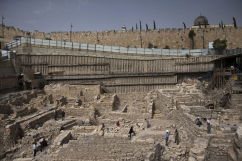
The Bible may have been written earlier than previously thought, according to new analysis of ancient fragments of pottery found in Israel.
A study published on Monday revealed that researchers at Tel Aviv University believe literacy may have been far more widespread in ancient Judea than was previously known.
Handwriting on fragments of inscribed pottery dating back to around 600 BC found in the Tel Arad fortress in the 1970s has now been analysed using sophisticated technology. The inscriptions are mostly shopping lists ("and a full homer of wine, bring tomorrow; don't be late," reads one) and military commands, but – experts say – they are notable because they were written by a range of people across the social classes.
"In other words, the entire army apparatus, from high-ranking officials to humble vice-quartermasters of small desert outposts, was literate," the study concluded.
"The results indicate that in this remote fort literacy had spread throughout the military hierarchy, down to the quartermaster and probably even below that rank. This implies that an educational infrastructure that could support the composition of literary texts in Judah already existed before the destruction of the first Temple."
A possible implication of these findings is that the Bible could have been written down earlier than previously thought.
Many scholars have maintained that the first five books of the Bible, the Pentateuch, could not have been written down as early as 600 BC because there were not enough scribes at the time.
If literacy rates were higher than previously recognised, as the new research suggests, however, it's possible that large swathes of the Old Testament were in the process of being written before Nebuchadnezzar's destruction of Jerusalem in 587 BC.
"We found indirect evidence of the existence of an educational infrastructure, which could have enabled the composition of biblical texts," said Professor Eliezer Piasetzky of Tel Aviv University, who co-led the research. "Literacy existed at all levels of the administrative, military and priestly systems of Judah. Reading and writing were not limited to a tiny elite."
However, some academics have warned against drawing bold conclusions from the findings.
Professor Edward Greenstein of Bar-Ilam University near Tel Aviv said even if some biblical texts were written down earlier than previously believed, they would still not have been widely circulated among the general Jewish population of the time.
"Biblical texts did not have to be written by many people, or read by many people, to have been written down," he said, according to the New York Times.