
Tributes continue to be paid to John Stott, one of the world’s most important evangelical leaders, who died on Wednesday at the age of 90.
Writing on a memorial website, the international director of Langham Partnership, Chris Wright, said it was “not possible to write the history of the church in the 20th century without reference to John Stott”.
“For the vast majority of people whose lives he influenced profoundly, however, he was simply ‘Uncle John’ – a much loved friend, correspondent, and brother, to whose prayers we will never know how much we owe,” he said.
“Like Moses, he was one of the greatest leaders God has given to his people, and yet at the same time, one of the humblest men on the face of the earth. He was, for all of us who knew him, a walking embodiment of the simple beauty of Jesus, whom he loved above all else.”
The Archbishop of Canterbury, Dr Rowan Williams, paid tribute to Stott as a man of “unsparing service and witness” who “won a unique place in the hearts of all who encountered him”.
“He was a man of rare graciousness and deep personal kindness, a superb communicator and a sensitive and skilled counsellor,” he said.
“Without ever compromising his firm evangelical faith, he showed himself willing to challenge some of the ways in which that faith had become conventional or inward-looking.
“It is not too much to say that he helped to change the face of evangelicalism internationally, arguing for the necessity of ‘holistic’ mission that applied the Gospel of Jesus to every area of life, including social and political questions.
“But he will be remembered most warmly as an expositor of scripture and a teacher of the faith, whose depth and simplicity brought doctrine alive in all sorts of new ways.
“We give thanks to God for his life and for all that was given to us through his ministry.”
In a joint statement, the Primate of the Church of Ireland, the Most Rev Alan Harper, and the Archbishop of Dublin, the Most Rev Michael Jackson, spoke of the theologian’s “great contribution” to the Anglican Communion and the whole church around the world.
They said: “His talks, his witness in ordained ministry for over sixty years, and, perhaps most significantly, his numerous publications were highly influential to the formation of many clergy and made a notable and valued impact on the lives and faith of lay people alike.
"Gracious to all who knew him, his loss will be felt widely while his writings will remain a fitting legacy to his life of Christian service.”
During his life, Stott wrote 50 books,which were translated into 65 languages. They include the million-selling Basic Christianity (1958), Christ the Controversialist (1970) Issues facing Christians Today (1984) and the one he always considered his best: The Cross of Christ (1986) which he dedicated to his secretary, Frances Whitehead, who worked with him for more than 55 years.
Mark Greene, executive director of the London Institute of Contemporary Christianity, noted the scale of Stott's achievements.
"His extraordinary undertakings in biblical scholarship, in thought leadership, in growing a local church, in building up evangelicals in the Church of England, in reshaping international mission to include social action, in creating an international movement of evangelicals - all this make his graciousness, meekness and humility seem all the more remarkable."
Stott passed away peacefully at a retirement home for former Anglican clergy at St Barnabas College, just outside London.
He was a classical evangelical throughout his life, never compromising on the need for personal conversion, the authority of Scripture and the centrality of Jesus’ death for sinners.
Yet he also believed that Christian engagement with the world should not be limited to evangelism and was passionate about the moral and social dimensions of the Gospel, including justice for the poor and the care of creation.
Among those paying tribute was Matt Frost, chief executive of Christian development agency Tearfund, which Stott served as president from 1983 to 1997.
He said: “His life and teaching was a prophetic challenge to us, and he insisted on keeping to a commitment to a simple lifestyle for the sake of those who are living in poverty.
“In his time and within a church culture that set great store by teaching and preaching, he used those tools to bring a fresh understanding of social justice and the church’s role in reaching out to those in need.”


-

Christian advent calendar sales 'soar' after online storm with Meghan Markle fans
-

What’s so fascinating about Church of England vicars?
-

Half of Catholic churches in Glasgow to close
-
Nicky Gumbel elected to Church of England parliament with a call to put evangelism first
-

The questions Britain must answer about Christian free speech
-

Christian beliefs increasingly unfamiliar to British public, research finds
Most Popular
News
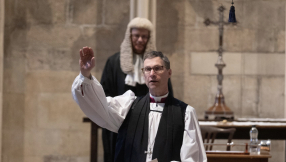
Bishop urges churches to embrace growing interest in Christianity
The Bishop of Blackburn has called on churches across Lancashire to prepare for a renewed interest in Christianity, saying there are encouraging signs of a “rebirth” among young people and families exploring faith.

Young people are finding their way to the Christian faith through media, says bishop
Bishop Ruth Bushyager says an exciting shift is happening after years of unfulfilling secularism.
John Lennox urges Christians to overcome fear of sharing their faith
“What we all can do is to share what Christ has done for us,” he said.

Anti-Christian harassment continues to rise in Jerusalem
Many perpetrators believe their actions are justified under Judaic law.








