
While a new era of politics in Iraq will emerge after the democratic national election was successfully held last weekend, the international aid agencies continue to focus on the progress of the construction of a new Iraqi government.
In a press release from the British charity Christian Aid yesterday, the agency raised its concerns over Iraq’s missing billions from the government funds. It is suspected that there is widespread corruption in post-war Iraq, according to an official US audit.
The war-torn country has been troubled by social and political instability following the fall of Saddam Hussein’s regime. While the humanitarian situation in Iraq remains critical and there are plenty of immediate needs on which money from international donors can be spent, at least $4 billion of Iraqi money earmarked for reconstruction has gone missing, according to a Christian Aid report released in October 2003 entitled, "Iraq: the Mission Billions". In June 2004, Christian Aid even reported that $13 billion has fallen into a financial black hole.
In a latest report to the US Congress, Gen Stuart Bowen, the special inspector general for Iraqi reconstruction accused the Coalition Provisional Authority (CPA) for failing to provide proper tracking of projects paid for with Iraq’s own funds, while it only focused on monitoring the spending of US taxpayers' money in Iraq carefully.
The Coalition Provisional Authority (CPA) is the US-controlled body that ruled Iraq following the fall of Saddam Hussein’s regime.
Iraq has abundant national income from its oil exports and other revenues. According to Resolution 1483 of the United Nations that established the CPA, all Iraqi oil and other seized funds must be used to meet the humanitarian needs of the Iraqi people and to finance the rebuilding of Iraq’s shattered infrastructure.
While billions of Iraq’s money is missing, Christian Aid suspected that the fund was being creamed off for the benefit of US companies. In turn this was adding to the frustration and resentment among some Iraqis, potentially fuelling violence, said the report.
The report said, "...there was no assurance the funds were used for the purposes mandated."
"It is clear that the monitoring and accounting systems were dysfunctional, and set a precedent for corruption that continues to this day," said David Phillips, a former State Department adviser on Iraq. "The number is staggering but the pattern of cutting corners has been well known from the beginning, and there has been an awful lot of cash floating around."
Former CPA chief Paul Bremer denied the charge in the report and refused to apologise. However, he said, "We are going to be completely transparent the funds are spent for the Iraqi people."
Christian Aid also urged the British Government to ensure that the money was properly spent.




-

Edinburgh University ends divinity programmes as theology faces a changing future
-

Why the Archbishop of Canterbury’s award controversy matters
-

More than one in four US Protestant churchgoers believe some biblical truths become outdated
-

Catholicism in France has 'collapsed'
-

Christian leaders issue ‘sober and urgent call’ for Western Church to prepare for disruption
-

Australia's anti-therapy laws harm the most vulnerable - Britain should not copy them
Most Popular
News

Active faith linked to happier marriages and lower divorce rates, study finds
People who regularly attend church are more likely to report happy marriages, according to a new report examining the relationship between faith and family life.

Indian churches fearing anti-conversion laws tell non-Christians: enter at your own risk
Churches in Dhamtari, a town in the central Indian state of Chhattisgarh, have put up notices warning non-Christians that they enter at their own risk, weeks after a law against religious conversion came into force in the state.

£1k bursaries to help churches develop youth and community mentoring programmes
Churches across the UK are being offered bursaries to help them establish mentoring programmes aimed at supporting young people and others in their communities.
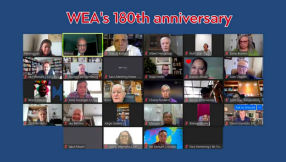
World Evangelical Alliance celebrates 180th anniversary
The World Evangelical Alliance (WEA) has held an online celebration to mark its 180th anniversary. Hundreds of people from more than 22 countries attended, and the event was rebroadcast to accommodate different time zones.








