A Chinese political advisor has called for a ban on churches in the city of Qufu, the birthplace of philosopher Confucius, because he believes they cause "intense controversy".
Zeng Zhenhu, a scholar in Qufu, Shandong province, wrote an article on January 21 claiming local officials were "secretly" building a Protestant church close to a Confucius Temple in the city. He said that all church buildings should be banned in Qufu.
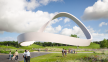
According to the Global Times, the building of this church – designed to hold 3,000 worshippers – was actually contested by 10 scholars in 2010, who claimed it "would trigger religious and cultural conflicts".
A local official denied Zeng's claim that the church had been built anyway, telling the Global Times that he had no knowledge of it.
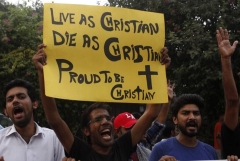
According to the Qufu Gazette there are at least 8,000 registered Protestants living in the city, and there are expected to be thousands more unregistered Christians. Christianity in China is experiencing unprecedented growth, with some experts estimating that up to 10,000 people are turning to the faith every day.
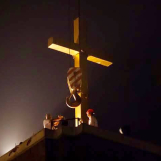
The Communist Party is believed to be becoming progressively more suspicious of the influence of Christianity, however, and has begun to crackdown on believers – most notably in Zhejiang province, south of Shangong. Up to 1,700 churches there have been targeted for demolition or had their crosses removed.
President Xi Jinping has called on China to return to traditional beliefs, such as Confucianism, rather than 'western' religions, and has introduced a hard-line approach to various parts of civil society, including religion.
Sebastien Billioud, associate professor in Chinese civilization at Diderot University in Paris, has suggested that there is a 'Confucian revival' in China. He told UCA News that some Chinese people believe "China needs Confucianism as a counter-current to the rise of Christianity".
Though Chairman Mao fiercely opposed Confucius' teachings, branding them "feudal", they have been gradually reintroduced in the years following his death in 1976.
In 2011, an 8m tall statue of Confucius was erected in front of the National Museum of China located in Tiananmen Square, though it was removed overnight four months later without explanation.
The Global Times reports that Zeng has received significant support online for his call to ban churches, particularly in the place of Confucius' birth.
"It is inappropriate to build mosques or churches on a large scale in the holy city," one user wrote on an online forum.
"Authorities should work to promote Confucianism and avoid turning the holy city of the East into a city of foreign religion."