A Catholic catechist has spoken of his work ministering to people in Mozambique who have had loved ones kidnapped and beheaded by jihadists.
Islamist violence is a well-known danger for Christians in places like the Middle East, Nigeria and, to a lesser extent, the Democratic Republic of the Congo, and even here persecution receives scant attention from politicians and secular media. Attention on Mozambique is even more scarce.
In fact, since 2017 the northern Cabo Delgado region of Mozambique has been plagued by the ISIS-affiliated group Ansar al-Sunna. Over 6,000 people have already been killed as a result of the insurgency, with another 460,000 displaced.
In October at least 20 Christians were killed and 1,300 homes were destroyed by coordinated attacks in Chiúre District. Two churches were also completely destroyed.
Adérito Benjamin Monteiro, 29, speaking to Aid to the Church in Need, told of the hardships faced by the survivors, many of whom live in Capo Delgado’s Ntele resettlement camp,
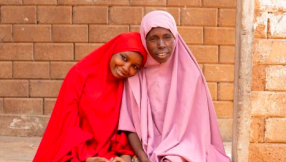
“These are people who have seen their sons, mothers, husbands and relatives beheaded, and others kidnapped by jihadist groups. They were forced to abandon everything, their homes, their farms, and all their possessions, and they have been resettled here," said Monteiro.
While conditions in the camp are far from ideal, with food, water and medical care in short supply, the settlement is home to St Anthony’s Chapel. The chapel is made out of natural and recycled materials, including old USAID bags. The chapel’s cross is simply two large tree branches.
Monteiro said, “In the midst of the horror and the trauma, we seek to rekindle the flame of hope, that Christ lives, that Christ is with us.
"We don’t have enough manuals for the catechists, so the same book will be used by two or three of us. One uses it in the morning, the other in the afternoon. This is just one of the difficulties we face.”
Clergy are themselves also in short supply, with Monteiro’s own parish covering 17 different areas, each of which having as many as five communities. Properly caring for them all is practically impossible with limited numbers and resources.
It is catechists, or teachers, like Monteiro who attempt to fill this gap and provide parishioners with the spiritual care they need.