
Last week, the Human Fertilisation and Embryology Authority (HFEA) in Britain granted a research license to the Newcastle Centre for Life, the University of Newcastle, for the cloning of human embryos. This has provoked many Christian medicals and pro-life groups to voice their opinions.
HFEA insisted that the license is for therapeutic cloning which is different from reproductive cloning. It involves the creation of an embryo with desired DNA. The embryo is then stimulated to grow until stem cells can be harvested for developing tissue to cure a wide range of diseases. The process ends at this point as the life of the embryo has already been terminated, so it is different from a reproductive cloning which aims to give birth to a baby with desired DNA.
The International Federation of Associations of Catholic Doctors (FIAMC) published a statement in response to the controversial license. It stated that, “it is ethically unacceptable to deliberately sacrifice the life of any human being, including in the embryonic state, even if it is done to improve the conditions of health of other human beings.”
Christian social concern charity CARE in Britain has called for a fundamental rethink on human cloning. CARE’s Head of Public Policy Roger Smith, said, “This is a bad decision for a whole range of reasons. Apart from what you do with the cloned embryo, there is no distinction between therapeutic and reproductive cloning - the knowledge, expertise and equipment are entirely the same. The only difference is whether the embryo lives or dies.”
He further stressed the inhumanity of the cloning technique, “We have to remember that the clone is a human being in itself. The Centre for Life will make and then kill an embryo as a source of spare parts for the use of others. This research cheapens human life.”
The Catholic Medical Professionals also questioned the need of developing cloning technique to cure diseases. FIAMC President Gian Luigi Gigli said, “Research with adult stem cells is not recognised, despite the fact that they are the only ones that have already given important results from the clinical point of view.”
He cited the recent publications on The Lancet, one of the most prestigious medical magazines in the world, “German researchers found that stem cells derived from bone marrow improved cardiac function after heart attacks... English scientists published that skin cells were transformed into brain cells, fostering the hope of finding a cure for Parkinson's free of ethical problems.”
“Paradoxically, The Lancet, has started a campaign for research with human embryonic stem cells as the United Nations debate approaches on the prohibition of cloning, and U.S. voters are being polled,” FIAMC observes.
FIAMC President hinted that there are enormous financial and industrial interests hidden behind cloning research, and commented that humanitarian ends are a simple veil which allows the manipulation of public opinion to be concealed.
FIAMC invites all Catholic doctors and researchers to become an active lobby, also on the occasion of electoral events, to obtain a total prohibition of all cloning of human embryos, even if it is for therapeutic reasons.



-

Edinburgh University ends divinity programmes as theology faces a changing future
-

Why the Archbishop of Canterbury’s award controversy matters
-

More than one in four US Protestant churchgoers believe some biblical truths become outdated
-

Catholicism in France has 'collapsed'
-

Christian leaders issue ‘sober and urgent call’ for Western Church to prepare for disruption
-

Australia's anti-therapy laws harm the most vulnerable - Britain should not copy them
Most Popular
News

Active faith linked to happier marriages and lower divorce rates, study finds
People who regularly attend church are more likely to report happy marriages, according to a new report examining the relationship between faith and family life.

Indian churches fearing anti-conversion laws tell non-Christians: enter at your own risk
Churches in Dhamtari, a town in the central Indian state of Chhattisgarh, have put up notices warning non-Christians that they enter at their own risk, weeks after a law against religious conversion came into force in the state.

£1k bursaries to help churches develop youth and community mentoring programmes
Churches across the UK are being offered bursaries to help them establish mentoring programmes aimed at supporting young people and others in their communities.
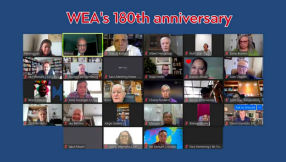
World Evangelical Alliance celebrates 180th anniversary
The World Evangelical Alliance (WEA) has held an online celebration to mark its 180th anniversary. Hundreds of people from more than 22 countries attended, and the event was rebroadcast to accommodate different time zones.








