Roman Catholic bishops are meeting for their general assembly from October 3 to 28. Their theme is 'Young People, Faith, and Vocational Discernment'.
The Synod Fathers have entered a second week of discussion. On Saturday they met with young people from all over the world at an event called 'Per noi – unici, solidali, creativi' ('For us – uniqueness, solidarity and creativity'). Moved with emotion, Pope Francis shunned his prepared speech in order to speak frankly with the young people present.
There is a visible presence of young people in Rome this October. They have come in support of a synod, or meeting, of bishops to explore how young people understand their faith and the Church more widely. Around 260 bishops were chosen to represent different regions and countries and gather in Rome alongside 60 'auditors' who give testimony to the gathering and around 20 'experts' who serve the synod by collating the views and giving a theological, sociological input.
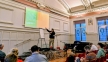
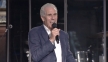
The event hosted on Saturday, October 6, acted as encouragement to the synod participants, who were present with Pope Francis. The evening included a mix of entertainment, testimony and reflection from around 50 young people, including singer Giovanni Caccamo. Attendance was mixed, with a large contingent of young religious, and while only around half of those present fitted into the official age bracket (16-29), those that were present were representative of the many ways that young people engage around the world. The event was conducted in Italian, with a translation provided via the Vatican Audio app. Due to technical difficulties and a lack of WiFi or data signal, this was not fully accessible during the event.
Testimonies included those from an Iraqi refugee, an ex-prisoner, an ecologist and a religious sister. The bishops also spoke to some delegates about the testimonies that they had heard during the first week of sessions. Bishops from around the world have been putting forward the biggest worries of young people in their countries, from unemployment, a generational gap, and persecution for faith. The European experience was represented during the event, although one participant suggested that it was not portrayed in a fair light. A young woman from Newcastle said, 'I can't begin to imagine what some persecuted Christians go through in other countries, but that doesn't make our experience any less valid. It must be so difficult to bring together such vastly different experiences.'
The performers posed seven questions to the synod of bishops that they hope will be answered in the closing document, which is due to be published in early November. It was thought that Pope Francis would address the themes of these questions in his speech. However, he chose not to use the prepared speech, instead speaking 'off the cuff' in colloquial Italian to those gathered. Pope Francis spoke with heightened emotion about the value of young people in society. He urged the young people to believe that they are priceless, asking them to 'not let yourself be bought, do not be seduced, do not let yourselves be enslaved by ideological colonisations that put ideas into your head'.
There were an equal number of men and women both performing and speaking at the event and as attenders. Both male and female religious gave testimonies. Women are also able to contribute to the synod directly as auditors – however, it seems that there are no female 'experts'. Neither young men or women can vote, as this is a right solely reserved for bishops. One synod expert understands that this issue is controversial, saying, 'the presence of women is real, their voice is taken seriously, but they are a small group within an overwhelmingly male environment'.
There have been many calls for the synod to be cancelled entirely, in order for the Church to focus primarily on the abuse scandal that is unfolding. One seminarian suggested that it is impossible to have a discussion about the future of the Church when it is currently in a state in which it cannot move forward. His opinion was countered however, by a young woman from Lincolnshire who said: 'We are not the Church of the future, but the Church now – and we have a right to be heard.' This week, the synod will reflect particularly on the role of young women, although no formal statements will be made until the end of the session.
For the young people out in Rome, Saturday's event was an opportunity for direct interaction between young people and the synod fathers in the midst of this wider conversation. Bishop Mark O'Toole, English bishop for evangelisation, appreciated the opportunity for young people to speak about 'finding a place where they could belong, where they were giving a space where they could be themselves, but also where they were at the reality of God and where the person of Jesus Christ was made real to them'. This event acted as one of the first steps on a long journey towards understanding the relationship that young people have with the Church.
Pope Francis used the idea of the 'road' or the 'way' several times in his speech. He spoke about looking forward, saying, 'Be young people on the move, looking at horizons and not in the mirror.' Critics would say that the Church must take a long, hard look in the mirror before setting new horizons.
However, as Archbishop Charles J Scicluna of Malta, the former Vatican sexual abuse prosecutor stated this morning, these critics should not be looking to the youth synod for the answer to the abuse crisis. ' I don't expect to see quick answers at this synod. There are so many other things that we need to discuss.'
Nina Mattiello Azadeh studied music and philosophy and was a Faith in Politics media intern in 2016. She has a keen interest in interfaith relations, social action and is a classical ballet dancer. Follow her on Twitter @Ninamataz