The Bangladesh High Court has ruled that Islam shall remain as the country's official religion, scrapping a 28-year-old petition that sought to change it.
Religious minority groups swiftly criticised the ruling, saying this would only embolden Islamist forces from inflicting more terror in the country.
A three-judge panel reportedly threw out the petition Monday as soon as the case was opened without allowing any testimony from the petitioners, according to Agence France Presse. The petition was filed in 1988 by a group of 15 activists.
"We are saddened [at the ruling]. It's a sad day for the minorities of Bangladesh," said Subrata Chowdhury, who represented the secular activists in the case, CBN News reported.
Many religious minority leaders expressed fear that the court's ruling could encourage more Islamist attacks against minorities in the country.
"It is sad that the court binned the petition without allowing the petitioners to present their arguments. This ruling will give a boost to the country's Islamist forces and it is a sad day for all religious minorities in Bangladesh," Rana Dasgupta, general secretary of the Bangladesh Hindu Buddhist Christian Unity Council, told Voice of America (VOA).
William Proloy Samadder, organising secretary of the Bangladesh Christian Association, also said: "In their letters, the Islamists said to our church leaders that Bangladesh would be ruled by Sharia law. As they threatened to kill our leaders, in some cases they also said that only Muslims would live in Bangladesh.''
"Monday's ruling has surely come as a shot in the arm for many of those Islamists. It is indeed frightening for all religious minorities."
Secularists have been arguing since that having Islam as the state religion "conflicts with the secular nature of the state and discriminates against non-Muslims."
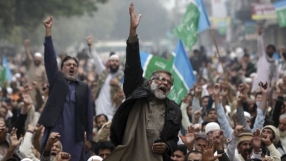
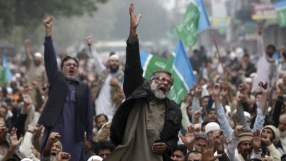
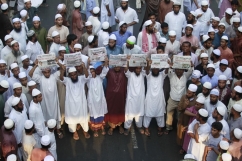
But leaders of Islamist groups that held demonstrations protesting the High Court's move to hear the petition believe that the court was aware of the Muslim sentiment and so it chose to reject the petition, VOA reported.
"We thank the court on behalf of the nation for rejecting the petition," said Fazlul Karim Kashemy, a Hefazat-e-Islam leader. "Muslims and non-Muslims in our society have been maintaining good relationship for long."
"Most Muslims in Bangladesh want Islam to remain the country's state religion. If the High Court decided to scrap Islam as the state religion, Muslims across the whole country would have erupted in rage," Maulana Anwar Hossain Rabbani, an HeI leader from Chittagong, also said.
Noor Hossain Qashmi, a Dhaka-based Hefazat-e-Islam leader, said Monday's ruling in no way poses any threat to non-Muslims in Bangladesh because the religious minorities in Bangladesh "have not faced any discrimination in the past decades while Islam has remained the state religion. They have nothing new to fear about now.''
But according to the news reports, Bangladesh has seen a series of attacks lately against religious minorities, atheist bloggers and foreigners. The Islamic State (ISIS) group claimed responsibility for most of those attacks.
The government, however, said many of the attacks were caused by domestic Islamist groups backed by the opposition parties.
Bangladesh is about 90 percent Muslim and 8 percent Hindu, with Christians and other religions filling the remaining 2 percent.