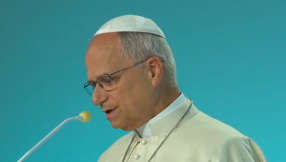
Bishop Michael Curry's sermon at the Royal wedding lit up Christian social media for a good fortnight afterwards – an eternity in internet news terms. But did it really light up people's lives – especially if they weren't already Christians predisposed to enjoy it? Not so much, according to a Theos analysis – but that's not to say it didn't do anything at all.
In a piece entitled ' What did Britain really think of the Royal wedding sermon?' Charlotte Hobson says that in spite of the Christian enthusiasm (generally speaking, that is – Curry was roundly abused as a heretic by conservatives) the reaction was rather mixed. Theos commissioned a ComRes poll of 2007 British adults asking them to what extent they agreed or disagreed with six statements about the sermon's appropriateness and impact.
Hobson says: 'a striking number of those who did respond positively and engage with the message were young in age and/or non–religious'. However, many 'neither agreed nor disagreed' with statements about whether sermons like that would make them more likely to go to church, whether it expressed ideas people could easily agree with or whether it increased their understanding of Christian beliefs. So, she says: 'we have a rather large proportion of respondents with either non–existent or very limited opinions on the sermon in question'.
However, there was a 'small but significant minority of individuals who did engage with and appreciate it – and by extension, the group of normally religiously–disengaged individuals for whom this address was informative and persuasive'. Sermons like Curry's would be more likely to encourage 10 per cent of religious 'nones' to attend church; and younger people were more impressed than older ones.
Hobson suggests that while a 14-minute sermon doesn't make a revival, its reception does show that a surprising number of people are more positive about and and willing to engage with Christianity than might be imagined.
She concludes: 'High–profile positive media coverage is undoubtedly worthy of celebration, but the need for small–scale, continual outreach and interaction with non–Christians is also undoubtedly worthy of acknowledgement. Bishop Curry might have "nudged the dial" a notch or two in a very high profile setting, but the work is far from complete.'