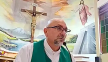
The recent mysterious disappearance of the Rev. Luke Yugue and his driver, Michael Gbeko, in South Sudan has left many Christians in the central African country worried about their safety and afraid to carry out ministry work across the troubled nation.
The two are believed to have been kidnapped by ethnic militia forces on April 27 while traveling by road on a motorbike from the Nagero Catholic parish to Tombura county in the state of Western Equatoria, bordering the Central African Republic and Congo.
Religious leaders, especially those from the Catholic Church, have been urging congregants across the country of more than 12.7 million people, about 61% of them Christian, to pray for the safety of the missing priest and his driver. The leaders have also been desperately appealing to the government to aid in the release of the two, who are believed to be held hostage, and to declare a state of emergency in the region where the kidnapping occurred.
The recent mysterious disappearance of the Rev. Luke Yugue and his driver, Michael Gbeko, in South Sudan has left many Christians in the central African country worried about their safety and afraid to carry out ministry work across the troubled nation.
The two are believed to have been kidnapped by ethnic militia forces on April 27 while traveling by road on a motorbike from the Nagero Catholic parish to Tombura county in the state of Western Equatoria, bordering the Central African Republic and Congo.
Religious leaders, especially those from the Catholic Church, have been urging congregants across the country of more than 12.7 million people, about 61% of them Christian, to pray for the safety of the missing priest and his driver. The leaders have also been desperately appealing to the government to aid in the release of the two, who are believed to be held hostage, and to declare a state of emergency in the region where the kidnapping occurred.
The country descended into civil war in December 2013, when Kiir accused his former deputy Riek Machar and 10 others of attempting a coup. Even though the conflict ended with a 2018 peace agreement that brought Kiir and Machar together, the country continues to see widespread fighting and kidnappings, especially in rural areas.
Between 2013 and 2018, reports indicate, nearly 400,000 people were killed as a result of the civil war. The conflict also left over 4 million South Sudanese displaced from their homes, with nearly 2.3 million fleeing to neighboring countries, including Uganda and Kenya.
Dozens of church leaders have been kidnapped or killed by government soldiers or rebels in the decade of fighting. The majority of them were kidnapped or killed while carrying out pastoral duties across the world's youngest nation.
Evangelist Mayol Kuot noted that the recent disappearance of religious leaders highlights the ongoing instability in the country and disrupts their ability to provide spiritual guidance, counseling, health care, education and other assistance to the populace, as well as care for orphans and children.
"The recent kidnapping of the priest is shocking to us. It shows that the security situation in the country is not improving at all," said Kuot, who ministers in Malakal, a town in northeastern South Sudan. "We are now afraid of going out in remote areas to preach the Word of God and serve vulnerable people who want our help as religious leaders."
Kuot said he has had friends who were murdered or kidnapped by unknown gunmen in road ambushes and churches while ministering. This causes other clergy in the country to be "demoralized," he said, and unable to continue working freely due to fear of attacks.
"You can't effectively work in such an environment when you are unsure if you will return home safe after ministering to people," Kuot said. "We need protection from the government to continue ministering to the suffering people of South Sudan who have been displaced from their homes due to war."
The Rev. Thomas Agou Kuur said dozens of his colleagues from the Episcopal Church have lost their lives since the civil war began in the country. Kuur, who is the assistant bishop of Bor Diocese, said that the people of South Sudan, especially militia groups, don't respect church leaders and instead kill them based on ethnicity.
The Dinka and Nuer are the two largest ethnic groups in South Sudan, and they have been fighting each other for political and economic power since even before the civil war. The Dinka ethnic group generally supports Kiir, while the Nuer ethnic group backs Machar.
"When militias from Dinka get a priest from the Nuer tribe, they will just kill him without considering that he is a priest serving everyone. It's the same situation when militias from Nuer get a Dinka priest," he said.
"We should care and love each other because we all belong to God, and therefore, we should respect human life," Kuur added.
Meanwhile, Kussala, the bishop of Tombura-Yambio, urged communities and political leaders to reconcile their differences and pursue peace, justice and reconciliation for the sake of the suffering people of South Sudan.
"I want to appeal for an end to violence in the country because it's destroying our lives and livelihoods daily," he said, pointing out tribalism and hatred as the main enemy of South Sudanese. "As a church, we will continue to walk the path of peace and to reach out to the vulnerable who want our help. We urge the government to protect the country from violence and church leaders as they carry out their ministries."
© Religion News Service