On this day in AD 64 began a fire of almost apocalyptic proportions in the city of Rome. The inferno was tragic and decisive, not just for the ancient metropolis, but for the Christians who were blamed for it.
'Now started the most terrible and destructive fire which Rome had ever experienced', wrote the historian Tacitus in around the year 116. Fuelled by high winds and chaos amongst the people, the fire would burn for six days, seven nights, and consumed most of the city.
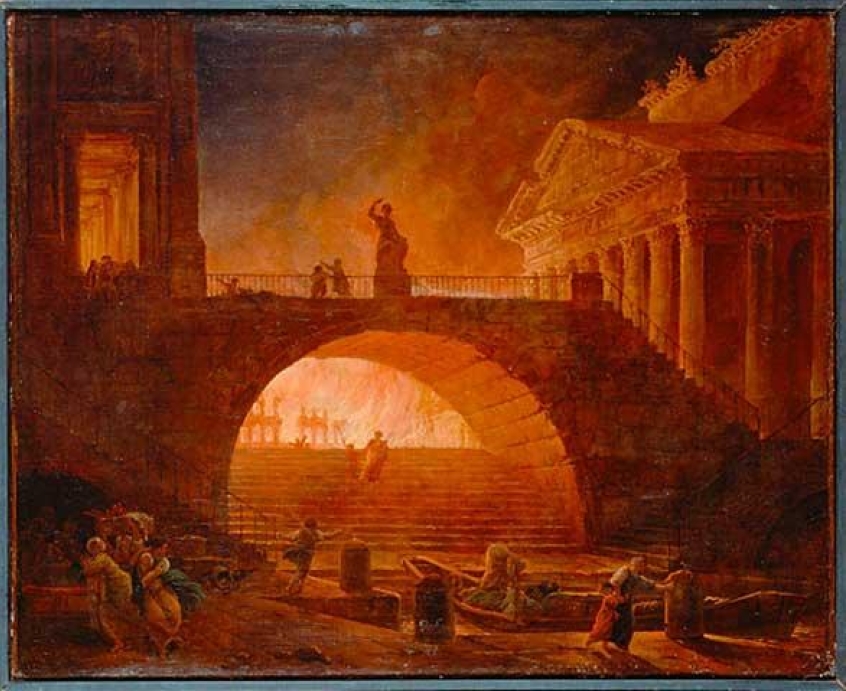
Tacitus wrote: 'Terrified, shrieking women, helpless old and young, people intent on their own safety, people unselfishly supporting invalids or waiting for them, fugitives and lingerers alike - all heightened the confusion. When people looked back, menacing flames sprang up before them or outflanked them.
'When they escaped to a neighbouring quarter, the fire followed - even districts believed remote proved to be involved. Finally, with no idea where or what to flee, they crowded on to the country roads, or lay in the fields. Some who had lost everything - even their food for the day - could have escaped, but preferred to die.'
But who started it? Various popular stories attribute it to the Roman Emperor Nero, who allegedly not only started the fire, but played the fiddle while he watched the city burn.
It's almost certainly untrue however: Nero was miles away in Antium when the fire began, and the fiddle wouldn't be invented for another 1500 years. But Nero was an opportunist, and used the scorching of Rome as an opportunity to rebuild, constructing for himself a lavish new palace – this naturally made some suspicious.
The fire needed a scapegoat, and Nero targeted Christians – he blamed Rome's destruction on the new religious sect, torturing and executing hundreds of believers on account of the fire.
Tacitus wrote: 'First those were arrested who confessed they were Christians; next on their information, a vast multitude were convicted, not so much on the charge of burning the city, as of "hating the human race."'
The faith community was killed for sport, eaten by animals, some stories – perhaps apocryphal – said that they were even lit up and burned alive as torches.
Here began a period of sporadic persecution against the faith, but more direct oppression would not come till about the mid-third century. As a subversive, obscure minority, the Christians were an easy target.
The fire of the summer of '64 may have been an accident, but Nero's use of it was certainly intentional. The tragedy showed Christians to be, as Tacitus wrote, the 'victims of the ferocity of one man'.