Christians should not be expected to leave their faith behind when they enter public life, according to former Liberal Democrat leader Tim Farron.
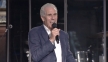
Farron, an evangelical Christian who resigned dramatically from his position following criticism of his views on homosexuality because he was 'torn between living as a faithful Christian and serving as a political leader', took aim the idea that politics should be a religion-free zone. Interviewed by Dr Krish Kandiah in connection with his book Faitheism, Farron said: 'In America it seems that you have to invent a faith in order to be taken seriously whereas in this country you have to pretend you haven't got one. I'd argue in both cases that's just stupid.'
He criticised the notion that 'values that one has because of one's faith are somehow inadmissible, whereas values that you've got because you've just wandered through life and picked them up...that's fine. That's nonsense. "You must leave your faith at the door, Tim." Well, are you going to leave all your values at the door? Does every Marxist have to disown their Marxism before they go into the debating chamber or start writing anything? Of course they don't.' Liberalism, he said, was 'not about assimilating and all being the same; that's terrifyingly totalitarian'.
In the interview posted on YouTube he also warned against Christians spending 'too much time talking about being persecuted and marginalised'. The UK was a 'free and safe country to be a Christian', he said, but added: 'Insofar as Christians do get stick for being Christians, that's how it is. That's how it's meant to be. If you find a culture, a worldly culture in which you do not find yourself living a counter-cultural existence as a Christian, you are doing it wrong.'
He said Christians should be 'absolutely concerned about the rights of Christians being persecuted, genuinely persecuted in very difficult places; be utterly concerned about the rights and freedoms of others, but so far as your own rights and freedoms [are concerned]? Take it on the chin, turn the other cheek.'
Asked about the need to build bridges between Christians and non-believers, he said: 'We live in a time that is religiously illiterate, because people haven't been churched, people haven't grown up in a religious family setting, anywhere near as much as they did a couple of generations ago.' However, he said Christians needed to learn how to engage with unchurched people better and avoid forming 'harsh or inaccurate views'.
Faitheism is published by Hodder, price £14.99.