Just last week, in one of central Nigeria's remotest villages, a seven-year-old boy was beheaded by a group of war-hungry Fulani militants. His friends and family were forced to abandon their homes. Farmland was destroyed. The local church was burned to rubble.
Hundreds upon hundreds of Christians have been killed in similar attacks. Across northern and central-belt states, Fulani militants continue to engage in an aggressive and strategic land-grabbing policy.
They want to replace diversity and difference with a monochrome ideology (similar to Boko Haram's) that is imposed with violence on those who refuse to comply. It is – according to the Nigerian House of Representatives – a genocide.
The Fulani insurgency has received zero press coverage in any mainstream Western media outlet, partly because it is taking place in such hard-to-reach locations, but mainly because there is little appetite for this kind of 'sensationalist' news. It seems we are tired of heart-breaking stories from Africa.
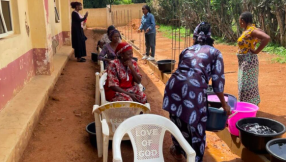
I have visited many of the worst affected areas and seen the tragedies of death and destruction.
One survivor told me: "The Fulani militants took my brother, his wife and all their six children. They tied and slaughtered them like animals. My sister was raped, and her wrists cut off before she was shot through the heart".
A lady from a neighbouring village shared a similar story. She said: "The Fulani were hacking and killing people, making sure that those that were shot were finished off. They wore red to conceal blood on their clothes as they butchered their victims."
In every village, the message from local people is the same: "Please, please help us! The Fulani are coming. We are not safe in our own homes." Yet time and again, we have ignored their cry for help. We are indifferent to their suffering.
International law is clear: when something is a genocide, it is appropriate to act. No more excuses. The UK must give greater effect to our obligations as a signatory to the 1948 Genocide Convention and our duty to protect. For the longer we tolerate these massacres, the more we embolden the perpetrators. We give them a 'green light' to carry on killing.
Baroness Caroline Cox is founder and president of the Humanitarian Aid Relief Trust (HART).