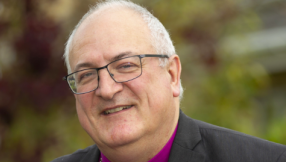
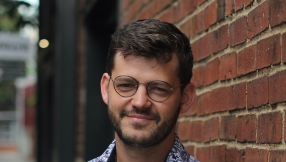
Sir Brian Souter, the founder of Stagecoach and Megabus, has spoken candidly about the role of Christian faith in business and his view that Britain’s increasingly secular culture may be giving rise to a renewed and more authentic form of Christianity.
Speaking in a recent episode of Heartbeat, a programme by the pro-life charity SPUC exploring faith and society, the Scottish businessman reflected on his decades-long experience of being a committed Christian while leading one of the UK’s largest transport companies.
Unlike many senior figures in finance and commerce, Sir Brian has never concealed his religious beliefs, even when doing so attracted criticism and controversy.
He said that working in business, rather than public-sector institutions, allowed greater freedom to express personal convictions and that he tried as much as possible to model Christ in his everyday life.
“What I've tried to do is … live out my faith day by day,” he said.
“I fail at that sometimes, but you know, I've got a perfect example in Jesus Christ.
"That's why I'm always going to fail, probably because He is the perfect example. But I want to try to emulate Him as much as I can in how I conduct myself each day.”
He credited this approach with shaping workplace culture during his time at Stagecoach, whose workforce at one time numbered 38,000.
Sir Brian stood down from his role in the Stagecoach Group in 2022 and now concentrates on other commercial ventures alongside philanthropic work through the Souter Trust, which provides assistance to charities and individuals across a range of causes.
Reflecting on wider cultural change, Sir Brian argued that Britain has moved beyond what he described as “institutionalised Christianity” — a shift he believes may ultimately be positive.
“I don’t believe we will [go back to institutionalised Christianity], and I think that’s a really good thing because I think part of the problem was institutionalised Christianity,” he said, suggesting that faith had become overly associated with rules rather than with the person of Christ.
He pointed to growth within charismatic, Black-majority and independent churches as evidence that Christianity is not disappearing but changing form.
In his view, a new generation is increasingly drawn to a faith that is less institutional and more centred on Jesus himself.
He remarked: “We forgot that our best asset is our role model and our unique selling proposition is our redeemer because that's where the dynamism and the power in Christianity comes from. So, for me, I actually think what's happened is really exciting just now. And I think we're seeing a rebirth of real Christianity, you know, really Christ focused.”
Sir Brian also highlighted what he described as notable trends among younger adults, particularly men, including increased church attendance, rising Bible sales and a growing scepticism toward what he termed “woke culture”.
He suggested this reflected dissatisfaction with secular humanism and a search for meaning beyond materialism.
The Scottish businessman expressed deep concern over recent political developments relating to abortion law in both Westminster and Holyrood.
He described proposals to further decriminalise abortion as “horrific”, arguing that they risk erasing moral boundaries around human life.
Sir Brian claimed there was little public appetite for such changes, citing polling that suggested widespread unease about late-term abortions.
He also criticised the continued use of at-home abortion pills introduced during the Covid-19 pandemic, raising concerns about medical complications and the lack of public scrutiny.
“Are we just blind to that as a society or is it a question of our media don't give us this sort of information?” he highlighted.
Sir Brian also spoke out strongly against proposals to legalise assisted suicide, warning that international experience showed such laws tend to expand beyond their original scope.
He argued that improved funding for palliative and hospice care, rather than assisted suicide, should be the priority.
Drawing on personal experiences of losing friends and family members who received high-quality end-of-life care, he said suffering could often be managed without intentionally ending life.
He also raised concerns about conscience protections for medical professionals, warning that some palliative care specialists might leave the profession if required to participate in or refer patients for assisted suicide.
Quoting from Psalm 139, he went on to say: “Life has significance and what happens in life determines where we're going to spend eternity … Life is sacred. It is special. It is significant. It is ordained by God.
“And so, I don't believe that we should be intervening either at the beginning of that or at the end of that,” he said, adding that while difficult medical decisions are sometimes unavoidable, deliberate killing crosses a moral line.
Despite cultural shifts, Sir Brian expressed optimism about the future of Christianity in Britain.
He encouraged Christians to be more confident and open about their beliefs, particularly when engaging with public institutions and political leaders.
He described speaking openly about faith during meetings with senior political figures and philanthropists, saying that direct references to belief in the risen Christ were often received with more openness than expected.
He said: “There is power in the name of Jesus … Why are we holding back about expressing what we believe? Because that's the truth of it. That's what makes us different. That's how we're making a difference in the world … I believe that people are more responsive now than they have been at any time in my lifetime.
“We've tried atheism, we've tried humanism, we've tried nothingness. Now it's time for something," he said.
Sir Brian remains a backer of initiatives like the National Prayer Breakfast, which aims to foster dialogue between Christians and individuals in public life.