The Archbishop of Canterbury has denounced far-right groups as "unchristian" and hit out at any attempts by them to appropriate Christian symbolism.
Writing in the Guardian, Archbishop Justin Welby said that Christian iconography had been "exploited" by the far right and that those doing so were "anti-Christian".
"Atheism or agnosticism are choices people may make, as are the different faiths, but no choice is an excuse for ignorance of others," he said.
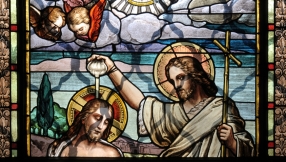
"And to remove any doubt, the Christian iconography that has been exploited by the far right is an offence to our faith, and all that Jesus was and is.
"Let me say clearly now to Christians that they should not be associated with any far-right group – because those groups are unchristian. Let me say clearly now to other faiths, especially Muslims, that we denounce people misusing such imagery as fundamentally antichristian."
The Archbishop denounced the riots as "criminal" actions that "must be controlled", and said that while free speech, freedom of worship, and the right to peaceful protest must be protected, these cannot be "underpinned by hatred and violence".
He spoke of the message of Jesus who taught people to love their neighbours "not in an emotional way, but in a tough, practical, actively seeking the flourishing of others way".
"And 'neighbour', to Jesus, did not just mean those living next door 'like us', but instead, extended to those who were different, even ancient enemies," he said.
"This country has shown at times that it is capable of that embrace of difference. Let's build more of those bonds, learning from those in riot-hit areas such as the imam in Liverpool and the chaplain in Sunderland, who have shown us a better way."
He praised examples of civic virtue seen during the riots, like a Church of England chaplain who escorted black nurses to their work at a hospital, and an imam who took food to a far-right group that had gathered outside his mosque.
However, the Archbishop also warned that there could be no quick fixes and that addressing the root causes of the division would require a "long and often painful process of addressing injustice" and "facing uncomfortable truths".
It would also mean addressing the needs of communities that have been "left behind", including good housing, health and education.
"It will involve serious conversations about what it means to live together well, knowing we share lots in common: streets, schools, universities, workplaces, media, as well as our fundamental humanity," he said.
"Embracing the opportunities and challenges offered by living in such a diverse country is a task for all of us, and it is clear from the last few weeks that that work is long overdue."