
As the new European Union Constitution was signed on 29 October, the 25 European countries are being bound together under a new covenant. While many people in the world are anticipating a bright economical future of Europe, the Vatican is worried about the secularisation that is sweeping across the continent. One of the very obvious signs are that the new European Union Constitution has made no reference to its very strong Christian roots.
Compared to problems such as poverty, AIDS and terrorism, secularisation has come to the Vatican as a more immediate concern, especially after the devoted Catholic EU Commission nominee Rocco Buttiglione was rejected by the European Parliament because of his Catholic views on homosexuality recently.
According to Pope John Paul, “Taking into account the Christian roots of the European continent remains fundamental for the future development of the union.”
The Pope is seriously concerned about the declining ethics in the society as the European politicians have accelerated the movement of secularisation through their legislations and policies that are against Christian teachings.
There is a serious chaos in aspects such as marriage, homosexuality, abortion, human cloning etc... Abortion and divorce are readily available in many European nations. Gay marriage is legal in Belgium and the Netherlands. In traditionally Roman Catholic Spain, a new socialist government is aggressively promoting legislation that will permit gay marriage, facilitate abortion and speed up divorce. In historically Catholic France, Christian symbols such as crucifixes have been outlawed, and Britain is making huge strides in the field of embryonic stem cell research.
Marco Politi, the Vatican correspondent for Italy’s La Repubblica newspaper, “There’s a real feeling that the Church is under an attack, an aggression, and that it must defend itself against this wave of de-Christianisation.”
Archbishop John Foley, head of the Pontifical Council for Social Communications said, “It’s not just a question of Christianity or even Catholicism...There’s this militant secularism, a denial of spirituality, of the destiny of the human person, and it’s a great concern.”
The Vatican encourages the churches in Europe to protest against their government’s legislation. Even though the voice of Catholics and Christians are considered only as a minority view, churches have to try their best to protest.
At the same time, Rocco Buttiglione, the withdrawn EU Justice Commissioner nominee, plans to form a religious lobby group to “battle for the freedom of Christians” in Europe. Many religious people, especially the Catholics are sorry for his “sacrifice” for being removed from the European Commissioner Team because of his frank confession for Christian beliefs.
Buttiglione even said that he had received thousands of letters of support from sympathisers across Europe and from Muslim and Jewish leaders in Italy.
Looking at the success of the US President, George Bush, who is being commented as the most religious president ever in America and is supported by most Christians to keep his position, Buttiglione is encouraged to take an initiative to make a change in Europe politics though he may find Europe not as ripe as the US for a return to traditional religious values.
Senior aides to the Italian minister told the Sunday Telegraph that the new Christian network would not take the form of a political party, but would be a kind of “movement or association” committed to a greater role for Christian principles in public life.
Buttiglione said last Friday, in a widely publicised interview with the European press, “What I am thinking of is a group to battle for the freedom of Christians, which is the freedom of everyone. A group to fight against the kind of creeping totalitarianism, which has emerged recently regarding my personal situation.”
Buttiglione commented what happened to him in the EU was “a gift from God”, just as some commentators say they hope that it will prompt more people to take an interest in European Union politics.
“It is much easier for regular people to care about religion and values than technical economic questions,” said Luca Diotallevi, a sociologist at the University of Rome who has studied the role of social values and religion in Europe. “It’s possible that it will generate more interest in the EU.”
“It’s positive,” Diotallevi said. “We will begin to discuss things that have long been taken for granted. Religion was an issue we could not touch- now we’re starting. We’re not very good at it, but we’re just getting started.”
50% OFF
NEWFAST NF-RE523 AC1200 WiFi Extender - 1200Mbps Dual Band Signal Booster & Internet Repeater
$18.5 $36.99
48% OFF
G Gradual Men's 7-inch Workout Running Shorts - Lightweight, Quick-Dry, Comfort
$12.91 $24.99
50% OFF

HDPE All-Weather Adirondack Chair with Built-In Cup Holder - Tool-Free Assembly (Grey)
$69.99 $139.99
60% OFF

HOMETUK Clear Plastic Storage Bins with Dividers - 3-Pack Stackable Acrylic Organizer Containers for Fridge and Pantry
$19.99 $49.99
58% OFF

G Gradual Men's Fishing Shirt - UPF 50+ Lightweight Short Sleeve Button Down with Zipper Pockets
$14.99 $35.99
55% OFF

Everyfun 60" Rectangular Platform Tree Swing - 700lbs Heavy Duty Adjustable Outdoor Swing (Colorful)
$49.99 $110.99
61% OFF

Ekouaer Women's Casual Loose Jumpsuit - One-Piece Printed Sleeveless Wide Leg Romper with Pockets
$14.99 $37.99
40% OFF
ROTAKE TB3 20V Heavy Duty 1/2" Cordless Impact Wrench Kit - 1380 Ft-Lbs Torque
$132 $219.99
36% OFF

Men's Athletic Running Shorts with Zipper Pockets - Lightweight & Quick Dry
$12.74 $19.99
61% OFF

Modern Ceiling Fan with Light and Remote - Reversible Quiet DC Motor
$69.3 $179.99
50% OFF

MOOKA H13 True HEPA Air Purifier for Home Large Room - 1076 sq ft Odor Eliminator
$39.97 $79.95
60% OFF

Ekouaer Women's Satin Silky Pajama Set - Short Sleeve Pullover Top & Wide-Leg Pants
$13.99 $34.99
55% OFF

Ekouaer 3-Piece Maternity & Nursing Pajamas Set - Short Sleeve Top with Shorts and Pants
$14.99 $32.99
11% OFF

VitaUp Beet Root Gummies with CoQ10 & Grape Seed - Nitric Oxide Circulation Support (60 Count)
$24.91 $27.91

Sealy 2-Pack Tritech 16" Twin Inflatable Air Mattress with Built-in AC Pump
$0 $113.99
20% OFF

INTEX Prism Frame 20ft x 52in Above Ground Pool Set - Round Steel Frame Swimming Pool
$695.99 $869.99

Gardner Pet 43" Heavy Duty Dog Crate with Wheels - Indestructible Folding Metal Cage (Black)
$0 $149.99
12% OFF

Elegant Mid-Century Modern Bar Stools - Set of 4
$395.99 $449.99
23% OFF

Ergonomic Office Chair - Big and Tall Desk Chair with Adjustable Lumbar Support
$279.99 $363.99
26% OFF

Magnelex American Flag Windshield Sun Shade - High-Resolution UV Reflective Heat Shield (X-Large)
$19.9 $26.9




-

Historic Lancashire church secures £250,000 National Lottery grant for major roof repairs
-
Sunderland Minster PCC was right to push back over trans toilet sign
-

Report warns religious freedom protections in Mexico exist largely ‘on paper’
-

Bethel Church distances itself from Todd Bentley and Mike Bickle
-

Christian police officer reaches settlement over diversity training discrimination claim
-
Turkey's hidden Christian past: Extraordinary discoveries are rewriting the story of early Christianity
Most Popular
News
Pride and the Gospel: the way of self or the way of Christ?
As Christians, our understanding of pride is shaped not primarily by culture, but by Scripture.
Campaign urging greater support for Christian education
Unite for Education founder, Niel Deepnarain, said Christians must be willing to engage publicly with educational issues rather than remain silent.
Welsh reverend speaks of culture of fear over LGBT issues
Many people have already left the Church in Wales over its stance on same-sex relationships, an evangelical leader has said.
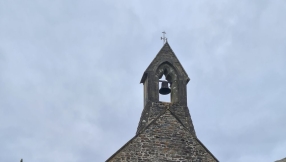
Reddit users declare small Welsh church best place in the world
Users voted to eliminate one half of a map until only one location remained.
NEWFAST NF-RE523 AC1200 WiFi Extender - 1200Mbps Dual Band Signal Booster & Internet Repeater
$18.5
G Gradual Men's 7-inch Workout Running Shorts - Lightweight, Quick-Dry, Comfort
$12.91
HDPE All-Weather Adirondack Chair with Built-In Cup Holder - Tool-Free Assembly (Grey)
$69.99
HOMETUK Clear Plastic Storage Bins with Dividers - 3-Pack Stackable Acrylic Organizer Containers for Fridge and Pantry
$19.99
G Gradual Men's Fishing Shirt - UPF 50+ Lightweight Short Sleeve Button Down with Zipper Pockets
$14.99
Everyfun 60" Rectangular Platform Tree Swing - 700lbs Heavy Duty Adjustable Outdoor Swing (Colorful)
$49.99
Ekouaer Women's Casual Loose Jumpsuit - One-Piece Printed Sleeveless Wide Leg Romper with Pockets
$14.99
ROTAKE TB3 20V Heavy Duty 1/2" Cordless Impact Wrench Kit - 1380 Ft-Lbs Torque
$132
Men's Athletic Running Shorts with Zipper Pockets - Lightweight & Quick Dry
$12.74
Modern Ceiling Fan with Light and Remote - Reversible Quiet DC Motor
$69.3
MOOKA H13 True HEPA Air Purifier for Home Large Room - 1076 sq ft Odor Eliminator
$39.97
Ekouaer Women's Satin Silky Pajama Set - Short Sleeve Pullover Top & Wide-Leg Pants
$13.99
Ekouaer 3-Piece Maternity & Nursing Pajamas Set - Short Sleeve Top with Shorts and Pants
$14.99
VitaUp Beet Root Gummies with CoQ10 & Grape Seed - Nitric Oxide Circulation Support (60 Count)
$24.91
Sealy 2-Pack Tritech 16" Twin Inflatable Air Mattress with Built-in AC Pump
$0
INTEX Prism Frame 20ft x 52in Above Ground Pool Set - Round Steel Frame Swimming Pool
$695.99
Gardner Pet 43" Heavy Duty Dog Crate with Wheels - Indestructible Folding Metal Cage (Black)
$0
Elegant Mid-Century Modern Bar Stools - Set of 4
$395.99
Ergonomic Office Chair - Big and Tall Desk Chair with Adjustable Lumbar Support
$279.99
Magnelex American Flag Windshield Sun Shade - High-Resolution UV Reflective Heat Shield (X-Large)
$19.9