
President Nicolas Sarkozy has broken a French taboo by urging a more active role for religion in public life, but stopped well short of the American-style mix of faith and politics his critics say he wants to copy.
A twice-divorced "cultural Catholic", Sarkozy used a visit to the Vatican on Thursday to declare France was rooted in Christianity and needed Catholics to be more active in public life because faith helped give meaning to life.
His trip to Rome, which included being inducted as honorary canon of the Basilica of Saint John Lateran, provoked charges that he was trying to blur the separation of church and state and make religion a political issue as in the United States.
In its front-page cartoon on Friday, the Paris daily Le Monde showed Sarkozy dressed as a bishop, with President George Bush shouldering a cross and an American flag and confessing to Pope Benedict: "I think this guy is stealing my job."
The Communist daily L'Humanite scoffed that Sarkozy had bowed his head to the Pope "like an altar boy" and "abandoned all reserve and placed his status as a Catholic above that of the head of a secular state."
In his speech accepting the canon's title, an honour given to French leaders since the 17th century, Sarkozy made repeated references to France's Christian roots - a link that Paris refused to have mentioned in Europe's planned constitution.
He also gave Pope Benedict a copy of his 2004 book "The Republic, Religions and Hope" in which he first spelled out his dissenting views about faith and French politics.
UPHOLD BOTH SIDES
But "Sarko the American" - a nickname he earned for his pro-American views - stressed he agreed with the separation of church and state and only wanted to ease some practices that faith leaders, especially Muslims, consider anti-religious.
"We should uphold both sides - accept the Christian roots of France ... while defending secularism," he said. "We don't want to change the law separating church and state. The French don't want that and the religions don't want it either."
Sarkozy said France needed "convinced Catholics who are not afraid to say who they are and what they believe." But he made clear he welcomed outspoken believers of all faiths and was not trying to mobilise Christians to support certain policies.
"Of course, those who do not believe should be protected from all forms of intolerance and proselytism," he said. "But a person who believes is a person who hopes. The republic has an interest in having many men and women who hope."
RTL radio commentator Serge July noted the Catholic Church in France has criticised Sarkozy's crackdown on immigration and plans to drop most restrictions on Sunday shopping. "Catholics may vote for him, but the bishops are wary," he said.
The president stopped short of discussing his own religious views, avoiding a faux pas the French might find even less pardonable than talking about religion and politics in general.
French commentators have expressed amazement that candidates in U.S. primaries discuss the Bible, question others' beliefs, reject evolution or declare that freedom required religion.
"France is very hostile to religion in politics," said Olivier Roy, a leading expert on secularism and religions, especially Islam. "We have different traditions for dealing with this."




-

Edinburgh University ends divinity programmes as theology faces a changing future
-

Why the Archbishop of Canterbury’s award controversy matters
-

More than one in four US Protestant churchgoers believe some biblical truths become outdated
-

Catholicism in France has 'collapsed'
-

Christian leaders issue ‘sober and urgent call’ for Western Church to prepare for disruption
-

Australia's anti-therapy laws harm the most vulnerable - Britain should not copy them
Most Popular
News

Active faith linked to happier marriages and lower divorce rates, study finds
People who regularly attend church are more likely to report happy marriages, according to a new report examining the relationship between faith and family life.

Indian churches fearing anti-conversion laws tell non-Christians: enter at your own risk
Churches in Dhamtari, a town in the central Indian state of Chhattisgarh, have put up notices warning non-Christians that they enter at their own risk, weeks after a law against religious conversion came into force in the state.

£1k bursaries to help churches develop youth and community mentoring programmes
Churches across the UK are being offered bursaries to help them establish mentoring programmes aimed at supporting young people and others in their communities.
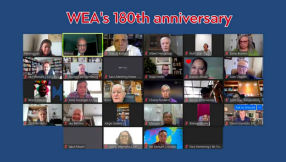
World Evangelical Alliance celebrates 180th anniversary
The World Evangelical Alliance (WEA) has held an online celebration to mark its 180th anniversary. Hundreds of people from more than 22 countries attended, and the event was rebroadcast to accommodate different time zones.








