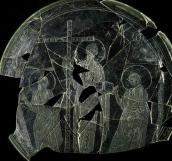
Oxford University has launched a centre to study ancient Christian relics such as bones claimed to be those of St John the Evangelist, John the Baptist and fragments purported to be from the true Cross.
The new centre will be based at Keble College's Advanced Studies Centre.
Researchers will use radiocarbon dating, genetics and theology to draw together research and findings from around the world to try and establish the authenticity or otherwise of some of the world's most famous relics.
The centre follows advances in science which now allow higher precision radiocarbon dating and DNA analysis that establishes common ancestries and likely geographic origin of individuals.
Oxford has led the field in this area. Researchers used the Radiocarbon Accelerator Unit to date the Shroud of Turin, believed by some to be the burial cloth of Christ. The unit concluded that shroud was made between 1260 and 1390.
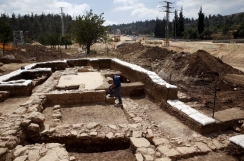
Professor Thomas Higham of Oxford also led a team dating six small bone fragments found on an island in Bulgaria named Sveti Ivan, translated as St John, which turned out to be the bones were of a man who lived in the Middle East at the same time as Jesus.
In 2014, the team also analysed remains of a small finger bone attributed to John the Baptist that was associated with the famous Guelph Treasure. The sample from the finger bone was dated to 660-770 AD, which meant it was too young for St John the Baptist.
More recent work has included analysis of remains thought to be of St Luke, St David, and the True Cross, on which Jesus was crucified. The results of these investigations have yet to be published.
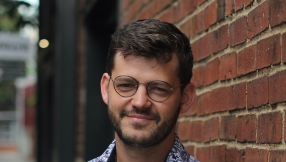
Professor Thomas Higham, deputy director of the unit, said: "It's the first time that scholars from many different disciplines have collaborated in the ongoing study of ancient religious relics. We will not be able to say with 100 per cent certainty that they belong to a particular individual who is celebrated as a saint. Nevertheless, through gathering a body of evidence we will be able to say whether or not the remains originate from the same time and place as the attributed saint."
Dr Georges Kazan of the School of Archaeology in Oxford said: "By analysing remains attributed to specific individuals, we hope to build up a picture of when and how relics appear in the historic record and whether any are related to each other in time and space. The Christian belief that relics were imbued with miraculous powers, granting benefits both in this world and the next, resulted in widespread demand and circulation, particularly in The Middle Ages. Scientific analysis has now shown that a number of relics attributed to specific saints are counterfeit or misidentified, but others may be of the time and place where a particular holy person lived.
"Whereas in the past larger samples were needed for dating, we now have the latest scientific processes that allow us to establish the true date from tiny samples - the size of a pinch of salt. Even if they have been handled over the centuries, we use processes that allow us to obtain the real dates by purifying the relics of more modern contaminant particles."