
|PIC1|Although it’s been nearly five centuries since pioneer Reformed church leader John Calvin planted ideas in the world that would come to influence major religious figures and entire religious movements, many of his thoughts are still as important today as they were then, says the President of the World Alliance of Reformed Churches.
In an address celebrating Calvin’s 500th birthday and the Reformed Church of France’s 450th anniversary, the Rev Dr Clifton Kirkpatrick said there were three themes that Calvin thought were so important in his day and that the WARC believes are important today as well.
The first theme, he said, is the call to share Calvin’s passion for the gift of communion.
“On a global basis, Calvin was always working for unity and common witness among Christians,” Kirkpatrick said. “He once wrote Archbishop Cranmer, that he would eagerly ‘cross ten seas’ if that would further the cause of Christian unity.”
Followers of Christ today find themselves in a fragmented church in a fragmented world, where conflicts are centred on religious difference.
“In our post-modern world this hunger for the gift of community is stronger than ever. In a fragmented and individualistic world, the church is called to be a genuine community of Christ and to express that unity regularly around the Lord’s Table,” Kirkpatrick stated.
The second theme, according to the WARC head, is covenanting for justice.
“In Geneva, Calvin was not only concerned about building up the Church, but also about establishing the general hospital that served as a social safety net for the dispossessed, welcoming immigrants, and shaping a social order where justice reigned,” he noted.
“We are called to realise afresh that the poverty and oppression of our world are not only morally wrong but are fundamentally an affront to God that we are called to change,” Kirkpatrick added.
According to the Reformed leader, the WARC had its vision “lifted” as the movement went from that of predominantly middle class people in Western nations to that of people from the world’s poorest places, such as Sudan, Malawi, Guatemala and Indonesia.
Today, two-thirds of the almost 100 million Reformed Christians in the world live in the Global South.
Amid its changing demographics, the world Reformed community came to embrace a “covenant of justice in the economy and the earth” through the Accra Confession, a document some have called historic, though it did not gain unanimous approval at the WARC’s 24th General Council.
The document stated that working to create a more just economy is essential to the integrity of Christian faith and that God has brought into existence an earth community based on justice and peace.
“At a time in which the gap is continuing to grow between the rich and the poor, millions live in abject poverty, and the destruction of our environment continues apace, we are called to stand against the forces of empire in our time and be the leading edge of a movement for justice in the economy and the earth,” Kirkpatrick stated.
The third theme Kirkpatrick brought out was that of the sanctity of life and the environment.
“Calvin doesn’t quite qualify to be called a ‘green theologian',” he said, “but it is interesting to read his sermons on Deuteronomy and see his deep passion for nature, his outrage at those, especially in times of war ,who would destroy the created order, and his sense of God’s presence in creation.
“Calvin had an equal passion for human life and an abhorrence for war,” Kirkpatrick insisted.
And according the WARC leader, the call to be peacemakers could not be more urgent than it is today – in a time of war, piracy, terrorism, domestic violence, abuse of human rights and the “rampant destruction” of the environment.
“As Reformed Christians we are called to lead in a different direction and to make our communities living demonstrations of love, compassion, justice, and mutual support. It is a tall order, but it is the will of God!” he exclaimed.
Kirkpatrick made his remarks during the May 21 to 24 synod of the French Reformed Church, which will mark the 450th anniversary of its first synod on Monday.
In his address, the WARC head urged the first and largest Protestant denomination in France to not only celebrate Calvin this year, but to “mine his legacy for a renewal of faithful witness in our time".
"[S]eek to learn from Calvin what it might mean to lead a Calvinist revolution in 21st century France,” he advised.
Next week, on Pentecost Sunday, the World Alliance of Reformed Churches will bring together Reformed Christians from all around the world to celebrate the Calvin Jubilee during a televised event in Cathedral St Pierre in Geneva.
On Calvin’s actual birthday – July 10 – celebrations and special events will be held all around the world.
50% OFF

NEWFAST NF-RE523 AC1200 WiFi Extender - 1200Mbps Dual Band Signal Booster & Internet Repeater
$18.5 $36.99
48% OFF

G Gradual Men's 7-inch Workout Running Shorts - Lightweight, Quick-Dry, Comfort
$12.91 $24.99
50% OFF

HDPE All-Weather Adirondack Chair with Built-In Cup Holder - Tool-Free Assembly (Grey)
$69.99 $139.99
60% OFF

HOMETUK Clear Plastic Storage Bins with Dividers - 3-Pack Stackable Acrylic Organizer Containers for Fridge and Pantry
$19.99 $49.99
58% OFF

G Gradual Men's Fishing Shirt - UPF 50+ Lightweight Short Sleeve Button Down with Zipper Pockets
$14.99 $35.99
55% OFF

Everyfun 60" Rectangular Platform Tree Swing - 700lbs Heavy Duty Adjustable Outdoor Swing (Colorful)
$49.99 $110.99
61% OFF

Ekouaer Women's Casual Loose Jumpsuit - One-Piece Printed Sleeveless Wide Leg Romper with Pockets
$14.99 $37.99
40% OFF

ROTAKE TB3 20V Heavy Duty 1/2" Cordless Impact Wrench Kit - 1380 Ft-Lbs Torque
$132 $219.99
36% OFF

Men's Athletic Running Shorts with Zipper Pockets - Lightweight & Quick Dry
$12.74 $19.99
61% OFF

Modern Ceiling Fan with Light and Remote - Reversible Quiet DC Motor
$69.3 $179.99
50% OFF

MOOKA H13 True HEPA Air Purifier for Home Large Room - 1076 sq ft Odor Eliminator
$39.97 $79.95
60% OFF

Ekouaer Women's Satin Silky Pajama Set - Short Sleeve Pullover Top & Wide-Leg Pants
$13.99 $34.99
55% OFF

Ekouaer 3-Piece Maternity & Nursing Pajamas Set - Short Sleeve Top with Shorts and Pants
$14.99 $32.99
11% OFF

VitaUp Beet Root Gummies with CoQ10 & Grape Seed - Nitric Oxide Circulation Support (60 Count)
$24.91 $27.91

Sealy 2-Pack Tritech 16" Twin Inflatable Air Mattress with Built-in AC Pump
$0 $113.99
20% OFF

INTEX Prism Frame 20ft x 52in Above Ground Pool Set - Round Steel Frame Swimming Pool
$695.99 $869.99

Gardner Pet 43" Heavy Duty Dog Crate with Wheels - Indestructible Folding Metal Cage (Black)
$0 $149.99
12% OFF

Elegant Mid-Century Modern Bar Stools - Set of 4
$395.99 $449.99
23% OFF

Ergonomic Office Chair - Big and Tall Desk Chair with Adjustable Lumbar Support
$279.99 $363.99
26% OFF

Magnelex American Flag Windshield Sun Shade - High-Resolution UV Reflective Heat Shield (X-Large)
$19.9 $26.9




-
Historic Lancashire church secures £250,000 National Lottery grant for major roof repairs
-

Sunderland Minster PCC was right to push back over trans toilet sign
-

Report warns religious freedom protections in Mexico exist largely ‘on paper’
-

Bethel Church distances itself from Todd Bentley and Mike Bickle
-

Christian police officer reaches settlement over diversity training discrimination claim
-

Turkey's hidden Christian past: Extraordinary discoveries are rewriting the story of early Christianity
Most Popular
News
Pride and the Gospel: the way of self or the way of Christ?
As Christians, our understanding of pride is shaped not primarily by culture, but by Scripture.
Campaign urging greater support for Christian education
Unite for Education founder, Niel Deepnarain, said Christians must be willing to engage publicly with educational issues rather than remain silent.
Welsh reverend speaks of culture of fear over LGBT issues
Many people have already left the Church in Wales over its stance on same-sex relationships, an evangelical leader has said.
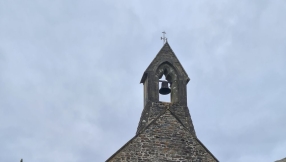
Reddit users declare small Welsh church best place in the world
Users voted to eliminate one half of a map until only one location remained.
NEWFAST NF-RE523 AC1200 WiFi Extender - 1200Mbps Dual Band Signal Booster & Internet Repeater
$18.5
G Gradual Men's 7-inch Workout Running Shorts - Lightweight, Quick-Dry, Comfort
$12.91
HDPE All-Weather Adirondack Chair with Built-In Cup Holder - Tool-Free Assembly (Grey)
$69.99
HOMETUK Clear Plastic Storage Bins with Dividers - 3-Pack Stackable Acrylic Organizer Containers for Fridge and Pantry
$19.99
G Gradual Men's Fishing Shirt - UPF 50+ Lightweight Short Sleeve Button Down with Zipper Pockets
$14.99
Everyfun 60" Rectangular Platform Tree Swing - 700lbs Heavy Duty Adjustable Outdoor Swing (Colorful)
$49.99
Ekouaer Women's Casual Loose Jumpsuit - One-Piece Printed Sleeveless Wide Leg Romper with Pockets
$14.99
ROTAKE TB3 20V Heavy Duty 1/2" Cordless Impact Wrench Kit - 1380 Ft-Lbs Torque
$132
Men's Athletic Running Shorts with Zipper Pockets - Lightweight & Quick Dry
$12.74
Modern Ceiling Fan with Light and Remote - Reversible Quiet DC Motor
$69.3
MOOKA H13 True HEPA Air Purifier for Home Large Room - 1076 sq ft Odor Eliminator
$39.97
Ekouaer Women's Satin Silky Pajama Set - Short Sleeve Pullover Top & Wide-Leg Pants
$13.99
Ekouaer 3-Piece Maternity & Nursing Pajamas Set - Short Sleeve Top with Shorts and Pants
$14.99
VitaUp Beet Root Gummies with CoQ10 & Grape Seed - Nitric Oxide Circulation Support (60 Count)
$24.91
Sealy 2-Pack Tritech 16" Twin Inflatable Air Mattress with Built-in AC Pump
$0
INTEX Prism Frame 20ft x 52in Above Ground Pool Set - Round Steel Frame Swimming Pool
$695.99
Gardner Pet 43" Heavy Duty Dog Crate with Wheels - Indestructible Folding Metal Cage (Black)
$0
Elegant Mid-Century Modern Bar Stools - Set of 4
$395.99
Ergonomic Office Chair - Big and Tall Desk Chair with Adjustable Lumbar Support
$279.99
Magnelex American Flag Windshield Sun Shade - High-Resolution UV Reflective Heat Shield (X-Large)
$19.9