The Methodist Church has praised the government's ratification of the UN's Arms Trade Treaty.
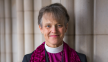
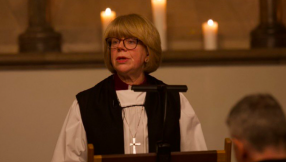
The President of the Methodist Conference, the Reverend Ruth Gee, hailed it as a "legal milestone that should help to protect those who are abused and oppressed".
Countries that ratify the treaty will be required to establish national arms regulators to control the exporting of conventional weapons and weapons components, and to properly regulate arms brokers. Domestic weapon sales will not be regulated.
Commenting on the treaty's requirements, Rev Gee said: "It makes clear that profiting from the sale of arms to oppressors is beyond a minimum standard of moral behaviour deemed acceptable in the 21st century.
"It also establishes the principle that the industry of arms production and sales should be accountable to the public."
The UK was one of 18 countries who turned in their ratification documents yesterday, as part of a ceremony celebrating the first anniversary of the UN's decision to adopt the new Arms Trade Treaty.
Among these 18 countries were five of the world's top 10 weapons exporters, France, Germany, Italy, Spain and the UK.
The other countries joining them were Bulgaria, Croatia, Denmark, El Salvador, Estonia, Finland, Hungary, Ireland, Latvia, Malta, Romania, Slovakia and Slovenia.
The Methodist Church first became involved in campaigning for global regulation of the arms trade more than a decade ago.
Rev Gee shared the principle behind the church's vision on this issue: "We are convinced that trade and economic exchange must be grounded on the principles of justice and the dignity of every individual that lie at the heart of the Christian faith."
Foreign secretary William Hague said he was "delighted to have overseen the successful conclusion of negotiations".
Speaking about the impact the treaty will have, Mr Hague said: "This Treaty will help make the world safer, by placing human rights and international humanitarian law at the heart of decisions about the arms trade.
"For the first time, countries have agreed international rules governing everything from small arms to warships. If these rules are implemented globally and effectively, they have the power to stop the arms from reaching terrorists and criminals, and fueling conflict and instability around the world."
However, all parties acknowledge that there is much more work to do. Out of 118 countries that have signed the treaty, so far only 31 have ratified it. The treaty will only take effect if 50 countries agree to ratify it.
Hague encouraged others in the international community to follow the UK's example: "We urge other countries - particularly the largest arms exporters - to ratify the Treaty and ensure it enters into force as quickly as possible. We will continue to support other nations in their plans to implement the Treaty."
The UN deputy secretary-general, Jan Eliasson, was quoted by the Associated Press urging other nations to ratify bear in mind the cost of the unregulated arms trade: "Every day, we witness the human cost of the irresponsible transfer of weapons.
"Civilians are still being killed, maimed, or driven from their homelands because weapons and ammunition remain in the hands of warlords, terrorists, human rights abusers and organised criminal gangs."
Ratification is likely to be difficult for the world's largest arms exporter, the United States, because treaties of this kind require a two-thirds congressional super-majority, and the National Rifle Association is providing vocal and strong opposition to any move towards more regulation of a trade sector that is worth between $60 to $85 billion globally.
Anna Macdonald, co-chair of the Control Arms Coalition, an umbrella NGO made up of dozens of groups in over 100 countries, said to AP that the most powerful argument for rapid ratification of the treaty was "the call of the millions who have suffered from armed violence around the world".
Speaking about the need to make the treaty's commitments a reality, Ms Macdonald said: "All of the governments ratifying here today can also act to show that these are not just words on paper, and a photo in the press.
"You have the opportunity now to lead by example. All governments are responsible for the arms trade, and all governments need to act to ensure it is brought under control."
Steve Hucklesby, Policy Adviser for the Methodist Church in Britain, said that once 50 countries have signed the treaty, there was a strong likelihood that "lives will be saved".
However he also called for those who had been involved in the Church's more than decade long campaign to avoid resting on their laurels: "We need to see the treaty make a real difference to arms exports.
"The job is not yet finished. Those who pressed governments to commit to the treaty will need to remain vigilant and call for its application to all situations where people are oppressed."