Islamic State has threatened to execute 180 Assyrian Christians held hostage by the jihadist group if a multi-million dollar ransom is not paid.
According to the director of the Assyrian Human Rights Network, Osama Edward, negotiations led by the head of the Church of the East in Syria "have been suspended due to the unbearable demands of the terror group".
"ISIS threatened to execute the 180 hostages if we didn't pay the ransom," Edward told ARA News.
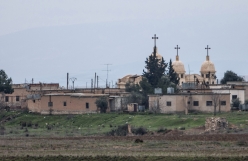
The Assyrians were among over 200 kidnapped by militants from 35 villages along the Khabur River in northern Syria in late February. Figures vary as to the exact number still missing, though at least 41 have been released, including 22 elderly men and women in August.
Initially, ISIS demanded a ransom fee of around $100,000 per hostage, totalling $23 million. When it became clear that the Assyrian community could not afford it, however, the amount was lowered. It is now between $12-$14 million.
A video was released by ISIS last week showing three of the hostages being executed. Wearing orange jumpsuits, the victims identify themselves as Dr Abdulmasih Aniya, Ashur Abraham and Bassam Michael. The three are from the towns of Tal Jazirah and Tal Shamiram.
As each man identifies himself, he says: "I am a Nazarene [a Christian]". They are then shot dead, before a militant demands money in return for the release of the remaining hostages.
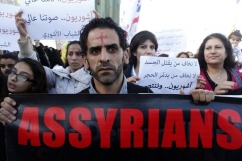
A Demand for Action (ADFA), a group campaigning for the protection of religious minorities, condemned the killing and called for international intervention.
"We condemn this latest act of barbarism in the strongest possible terms. The systematic ethno-religious cleansing of Assyrians/Syriacs/Chaldeans continues. They are helpless. They are children. They are women. They are somebody's father and brother," a statement from the group said.
"We plea and beg of the international community to intervene immediately. We have been driven out of our ancestral lands. We have been killed and crucified. The international community must act now to save lives of others kidnapped."
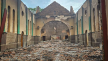
Since the attacks in February, ISIS has besieged several ancient Assyrian sites, including the Iraqi city of Nimrud, the village of Khorsabad, and Hatra, a 2,000-year-old city. On Easter Sunday, militants destroyed the Virgin Mary Church in Tel Nasri, Khabur.
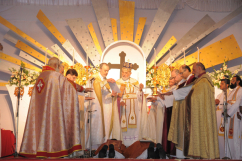
An ancient branch of Christianity, the Assyrian Church of the East has roots dating back to the 1st century AD. Assyrian Christians speak Aramaic, the language of Jesus, and have origins in ancient Mesopotamia – a territory which spreads across northern Iraq, north-east Syria and south-eastern Turkey.