
Iraq threw open the world's third largest oil reserves to foreign firms on Monday, putting British and U.S. companies in pole position five years after U.S.-led troops invaded the country to oust Saddam Hussein.
The move to invite bids for the development of Iraq's largest producing oilfields should mark the return of the oil majors, whose cash and expertise Iraq needs to restore its oil infrastructure that has been hard hit by sanctions and war.
But any awards to U.S. and British firms could anger opponents of the invasion, who have said the 2003 war was designed to give Western oil companies control over Iraqi oil reserves. U.S. and British officials have denied the charges.
By allowing international firms to help raise output at its key producing oil fields, the Iraqi government is breaking with the policy of major oil-producing neighbours such as Saudi Arabia, Kuwait and the United Arab Emirates where national firms keep tight control of foreign investment in their oil sectors.
"The six oilfields that have been announced today are the backbone of Iraq's oil production, and some of them are getting old and production is declining," Oil Minister Hussain al-Shahristani told a news conference.
"With its massive proven reserves, Iraq should not stay at its current level of production. Iraq should be the second or third largest oil producing country (in the world)."
Shahristani listed the fields as Rumaila, Kirkuk, Zubair, West Qurna Phase 1, Bai Hassan and Maysan - which comprises three separate fields: Bazargan, Abu Gharab and Fakka.
The Oil Ministry said they were open for long-term development contracts. Iraqi has prequalified 41 foreign firms.
Shahristani said he hoped contracts could be signed in June 2009 to raise output by a combined 1.5 million barrels per day at those fields. He added that Iraq aimed to raise output to 4.5 million bpd by 2013 from the current 2.5 million bpd.
He said any firm that wanted to bid must open an office in Baghdad. Currently, few foreign companies have any presence in Iraq because of the security situation.
FRUSTRATION OVER SHORT-TERM DEALS
Iraq said last week it also hoped to sign six short-term oil technical support contracts during the next month.
But Shahristani, showing frustration, said talks on deals that were supposed to quickly boost output at fields by utilising the technical expertise of majors were still going on.
He said the firms were reluctant to sign the technical support contracts because they would offer their advice from abroad and preferred to be hands on with the fields.
"We are losing time," Shahristani added.
Taken together, the short-term and long-term contracts should open the door to major foreign involvement in the OPEC member's oil sector for the first time in nearly four decades.
The majors have been positioning themselves for years in the hope of eventually gaining access to Iraq's oil reserves.
Its proven reserves, at 115 billion barrels, are the world's largest after Saudi Arabia and Iran. Deputy Prime Minister Barham Salih said in April that as-yet unproven reserves could make the overall total as much as 350 billion barrels.
The short-term technical deals, each worth about $500 million, are aimed at lifting output at Iraq's largest producing fields by a combined 500,000 barrels a day.
Five of the short-term deals that have been under discussion are with Royal Dutch Shell; Shell in partnership with BHP Billiton; BP; Exxon Mobil; and Chevron in partnership with Total.
Iraq has also been in talks with a consortium of Anadarko, Vitol and Dome for a sixth short-term contract.
Those talks on the short-term deals should give the majors concerned a head start in efforts to bid for future contracts, although Shahristani said no company would get any "privilege" in bidding for the fields announced on Monday.
RESENTMENT
Many Iraqis still bear a grudge after British, American and French oil companies controlled their oil industry for half a century through the Iraq Petroleum Co (IPC).
It was an era when Western majors working in the Middle East used oil output and prices as an economic and political tool, analysts said.
From the time it struck oil at the huge Kirkuk field in 1927 until nationalism forced it out in 1972, IPC - made up of BP, Exxon, Mobil, Shell, CFP (Total) and Partex - ruled the roost. That did not go well with Baghdad, which resented IPC's control.
Oil is Iraq's main source of income, and boosting output is key to earning the cash the country needs for reconstruction.
Iraq's cabinet agreed a draft oil law in February last year, but it has failed to get through parliament.
In the absence of the law, Baghdad has moved ahead with the contracts, saying this is in line with an old oil law in existence before the invasion that toppled Saddam.
50% OFF
NEWFAST NF-RE523 AC1200 WiFi Extender - 1200Mbps Dual Band Signal Booster & Internet Repeater
$18.5 $36.99
48% OFF
G Gradual Men's 7-inch Workout Running Shorts - Lightweight, Quick-Dry, Comfort
$12.91 $24.99
50% OFF

HDPE All-Weather Adirondack Chair with Built-In Cup Holder - Tool-Free Assembly (Grey)
$69.99 $139.99
60% OFF

HOMETUK Clear Plastic Storage Bins with Dividers - 3-Pack Stackable Acrylic Organizer Containers for Fridge and Pantry
$19.99 $49.99
58% OFF

G Gradual Men's Fishing Shirt - UPF 50+ Lightweight Short Sleeve Button Down with Zipper Pockets
$14.99 $35.99
55% OFF

Everyfun 60" Rectangular Platform Tree Swing - 700lbs Heavy Duty Adjustable Outdoor Swing (Colorful)
$49.99 $110.99
61% OFF

Ekouaer Women's Casual Loose Jumpsuit - One-Piece Printed Sleeveless Wide Leg Romper with Pockets
$14.99 $37.99
40% OFF
ROTAKE TB3 20V Heavy Duty 1/2" Cordless Impact Wrench Kit - 1380 Ft-Lbs Torque
$132 $219.99
36% OFF

Men's Athletic Running Shorts with Zipper Pockets - Lightweight & Quick Dry
$12.74 $19.99
61% OFF

Modern Ceiling Fan with Light and Remote - Reversible Quiet DC Motor
$69.3 $179.99
50% OFF

MOOKA H13 True HEPA Air Purifier for Home Large Room - 1076 sq ft Odor Eliminator
$39.97 $79.95
60% OFF

Ekouaer Women's Satin Silky Pajama Set - Short Sleeve Pullover Top & Wide-Leg Pants
$13.99 $34.99
55% OFF

Ekouaer 3-Piece Maternity & Nursing Pajamas Set - Short Sleeve Top with Shorts and Pants
$14.99 $32.99
11% OFF

VitaUp Beet Root Gummies with CoQ10 & Grape Seed - Nitric Oxide Circulation Support (60 Count)
$24.91 $27.91

Sealy 2-Pack Tritech 16" Twin Inflatable Air Mattress with Built-in AC Pump
$0 $113.99
20% OFF

INTEX Prism Frame 20ft x 52in Above Ground Pool Set - Round Steel Frame Swimming Pool
$695.99 $869.99

Gardner Pet 43" Heavy Duty Dog Crate with Wheels - Indestructible Folding Metal Cage (Black)
$0 $149.99
12% OFF

Elegant Mid-Century Modern Bar Stools - Set of 4
$395.99 $449.99
23% OFF

Ergonomic Office Chair - Big and Tall Desk Chair with Adjustable Lumbar Support
$279.99 $363.99
26% OFF

Magnelex American Flag Windshield Sun Shade - High-Resolution UV Reflective Heat Shield (X-Large)
$19.9 $26.9




-

Historic Lancashire church secures £250,000 National Lottery grant for major roof repairs
-

Sunderland Minster PCC was right to push back over trans toilet sign
-

Report warns religious freedom protections in Mexico exist largely ‘on paper’
-

Bethel Church distances itself from Todd Bentley and Mike Bickle
-

Christian police officer reaches settlement over diversity training discrimination claim
-
Turkey's hidden Christian past: Extraordinary discoveries are rewriting the story of early Christianity
Most Popular
News
Pride and the Gospel: the way of self or the way of Christ?
As Christians, our understanding of pride is shaped not primarily by culture, but by Scripture.
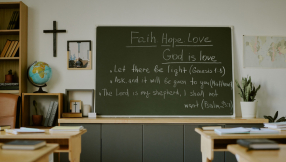
Campaign urging greater support for Christian education
Unite for Education founder, Niel Deepnarain, said Christians must be willing to engage publicly with educational issues rather than remain silent.
Welsh reverend speaks of culture of fear over LGBT issues
Many people have already left the Church in Wales over its stance on same-sex relationships, an evangelical leader has said.

Reddit users declare small Welsh church best place in the world
Users voted to eliminate one half of a map until only one location remained.
NEWFAST NF-RE523 AC1200 WiFi Extender - 1200Mbps Dual Band Signal Booster & Internet Repeater
$18.5
G Gradual Men's 7-inch Workout Running Shorts - Lightweight, Quick-Dry, Comfort
$12.91
HDPE All-Weather Adirondack Chair with Built-In Cup Holder - Tool-Free Assembly (Grey)
$69.99
HOMETUK Clear Plastic Storage Bins with Dividers - 3-Pack Stackable Acrylic Organizer Containers for Fridge and Pantry
$19.99
G Gradual Men's Fishing Shirt - UPF 50+ Lightweight Short Sleeve Button Down with Zipper Pockets
$14.99
Everyfun 60" Rectangular Platform Tree Swing - 700lbs Heavy Duty Adjustable Outdoor Swing (Colorful)
$49.99
Ekouaer Women's Casual Loose Jumpsuit - One-Piece Printed Sleeveless Wide Leg Romper with Pockets
$14.99
ROTAKE TB3 20V Heavy Duty 1/2" Cordless Impact Wrench Kit - 1380 Ft-Lbs Torque
$132
Men's Athletic Running Shorts with Zipper Pockets - Lightweight & Quick Dry
$12.74
Modern Ceiling Fan with Light and Remote - Reversible Quiet DC Motor
$69.3
MOOKA H13 True HEPA Air Purifier for Home Large Room - 1076 sq ft Odor Eliminator
$39.97
Ekouaer Women's Satin Silky Pajama Set - Short Sleeve Pullover Top & Wide-Leg Pants
$13.99
Ekouaer 3-Piece Maternity & Nursing Pajamas Set - Short Sleeve Top with Shorts and Pants
$14.99
VitaUp Beet Root Gummies with CoQ10 & Grape Seed - Nitric Oxide Circulation Support (60 Count)
$24.91
Sealy 2-Pack Tritech 16" Twin Inflatable Air Mattress with Built-in AC Pump
$0
INTEX Prism Frame 20ft x 52in Above Ground Pool Set - Round Steel Frame Swimming Pool
$695.99
Gardner Pet 43" Heavy Duty Dog Crate with Wheels - Indestructible Folding Metal Cage (Black)
$0
Elegant Mid-Century Modern Bar Stools - Set of 4
$395.99
Ergonomic Office Chair - Big and Tall Desk Chair with Adjustable Lumbar Support
$279.99
Magnelex American Flag Windshield Sun Shade - High-Resolution UV Reflective Heat Shield (X-Large)
$19.9