
Voting has got underway for new members of the Church of England's General Synod.
Members of the Church of England have begun casting their votes for the next five-year sitting of Synod by postal ballot.
There are two elections taking place in diocesan-wide constituencies, one for members of the House of Clergy and the other for members of the House of Laity.
With all diocesan bishops being members by right, the remaining spaces in the House of Bishops are filled by provincial-wide elections of area and suffragan bishops.
The Synod acts as the Church's parliamentary body, passing legislation and regulating relations with other churches.
It is also responsible for approving liturgy and doctrine, as well as the Church's annual budget, and considers the Church's position on issues of religious or public interest.
General Synod sits for a fixed term of five years and each Quinquennium is opened by the Queen.
The new Synod will meet for the first time in November in Church House, Westminster.
Electors have until October 8 to cast their vote using the single transferable vote.
-

Sharing your faith: practical tips for evangelism
-

‘The UK is a mission field’ - churches encouraged to embrace cross-cultural mission on their doorstep
-

Hillsong’s Joel Houston opens up about season of 'soul-searching' after difficult few years
-

The Conversion Practices Bill is weaponised vagueness
News
-
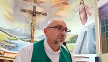
Priest dies after cross falls on him during livestreamed Mass
-

John Lennox urges Christians to overcome fear of sharing their faith
-

The Conversion Practices Bill is weaponised vagueness
-

Anti-Christian harassment continues to rise in Jerusalem
-

Christians remember Aberfan disaster 60 years on
-

Young people are finding their way to the Christian faith through media, says bishop
Most Popular
News
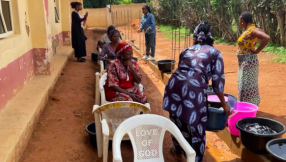
Christian widows in Nigeria hold fast to faith as they rebuild lives after violence
Hundreds of Christian widows in Nigeria’s Plateau State are putting their lives back together after losing husbands, homes and livelihoods to violence.

8 killed in attack on church in Jordan
In response to the shooting, Church leaders vowed that Christians will not be driven from their homeland.
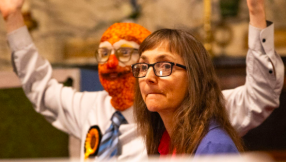
The Christian candidate who lost the election but won my respect
Helen Spiby-Vann secured just 63 votes in the Holborn and St Pancras by-election, but her campaign made me reconsider the value of an explicitly Christian voice in politics, writes Christian Hacking.
Can we afford the society we have created?
Is spending spiralling out of control? Should the state be doing everything we expect of it, or can we simply no longer afford the society we have created?





